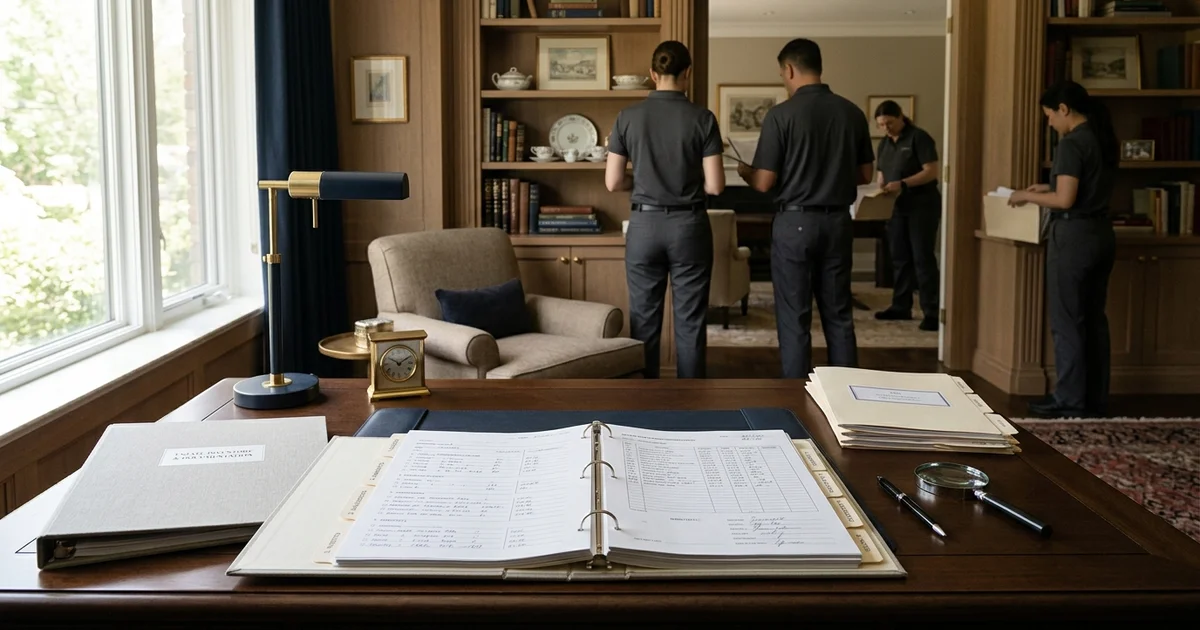
What the Package Is For
When the house is empty, an executor still needs to answer one question for the beneficiaries, the lawyer and sometimes the court: where did everything go? The executor documentation package is the answer, in writing. It is included on every job in our executor services, and it is built as the work happens, not reconstructed afterward.
The Five Parts of the Package
1. Itemized inventory
A room-by-room list of the home's contents. Notable items, such as jewelry, art, silver, antiques and collections, are listed individually with photographs. Everyday items are grouped sensibly. Each line shows the item's destination.
2. Beneficiary and shipping records
A record of every item delivered or shipped to a beneficiary: what it was, who received it, when, and any photo approval given. This is the record that settles "who took what" questions later.
3. Auction settlement statements
For items sold through MaxSold, a statement for each auction wave lists every lot, its hammer price, the 15% coordination fee and the net amount returned to the estate.
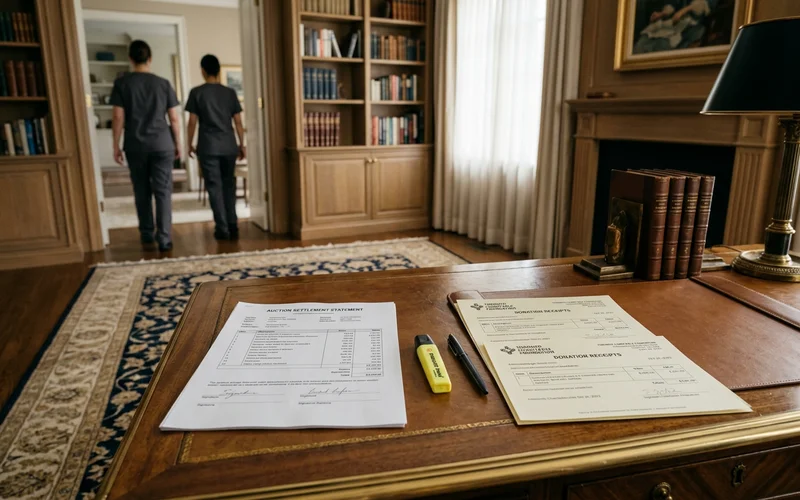
4. Donation receipts
Receipts from Habitat for Humanity ReStore, Salvation Army, Toronto Goodwill and other charities, requested in the estate's name where the charity issues receipts, with a summary of what went where. Our guide to donation tax receipts explains how these work.
5. Disposal manifests
A record of items recycled, sent to e-waste or disposed of, including hazardous materials separated for proper handling. Manifests close the loop so every item that was in the home is accounted for.
Who Uses Each Document
| Document | Executor | Estate lawyer | Accountant | Bank | Beneficiaries |
|---|---|---|---|---|---|
| Inventory | Yes | Yes | Sometimes | Sometimes | On request |
| Beneficiary records | Yes | Yes | No | No | Yes |
| Auction statements | Yes | Yes | Yes | Sometimes | Yes |
| Donation receipts | Yes | Sometimes | Yes | No | On request |
| Disposal manifests | Yes | Sometimes | No | No | On request |
How the Package Is Delivered
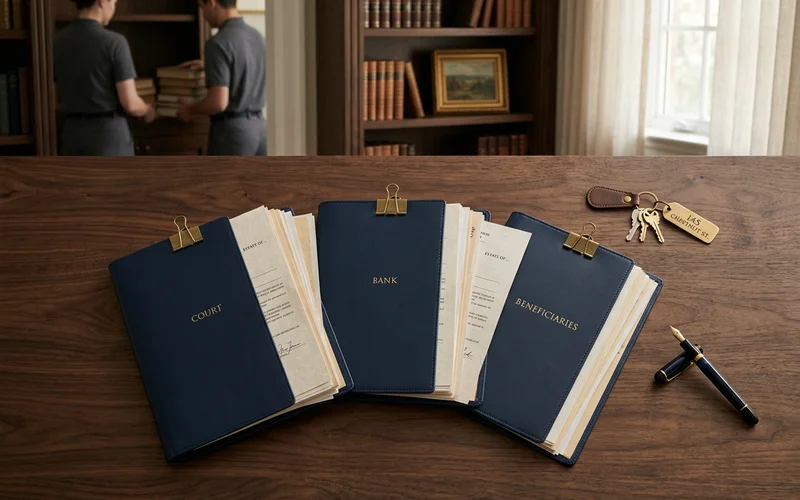
You receive the package at the final handoff, together with the keys, as printed copies in a tabbed binder and as digital files. With your written authorization, we send copies directly to your estate lawyer, accountant or bank. Many lawyers prefer to receive the files directly so they can add them to the estate file. This matters most for a remote executor managing a Toronto estate from another city.
Why referring lawyers mention it first
Dr. James K., a probate lawyer at a Bay Street firm, refers 2 to 3 estates a month to us. He reports that the documentation package has survived three probate court audits without issue and calls it his cleanup compliance insurance.
What the Package Does Not Do
The package is a record of facts. It does not give legal or tax advice, and it does not replace a formal, certified appraisal where your lawyer requires one. Instead, it gives those professionals what they need to do their work quickly and accurately.
When Executors Use the Package
The documentation package is not just a binder for the shelf. Executors use it at several points in the estate:
- When beneficiaries ask questions. Where did the piano go? What did the silver sell for? The answer is on a page, not in someone's memory.
- When the lawyer prepares accounts. The inventory, auction statements and receipts support the estate's records of personal property.
- When the accountant prepares returns. Donation receipts and auction proceeds are gathered in one place.
- When the bank asks for evidence. Some institutions want to see how assets were handled before releasing funds.
- When the estate closes. A complete record lets the executor finish the role with confidence.
How the Package Is Built
The package is assembled as the work happens. Photos and inventory lines are recorded room by room. Beneficiary claims are logged when the executor approves them. Auction statements are added after each wave. Donation receipts are filed after each run. Disposal manifests are completed as loads leave. By the final day, the package is already complete, which is why it can be handed over with the keys rather than weeks later.
A Sample Inventory Line
| Room | Item | Destination | Record |
|---|---|---|---|
| Primary bedroom | Gold wedding band and pearl necklace | Beneficiary: daughter, Vancouver | Shipped, photo approval on file |
| Living room | Pair of mid-century teak lounge chairs | MaxSold auction, wave 1 | Settlement statement, lot 12 |
| Kitchen | Everyday dishes and cookware, 4 boxes | Donation: Salvation Army | Receipt on file |
| Garage | Old paint and solvents | Hazardous materials drop-off | Disposal manifest |
When the last box leaves, the package means you can answer any question about the contents in minutes. That is what makes it the most valuable thing we hand an executor, after the keys.