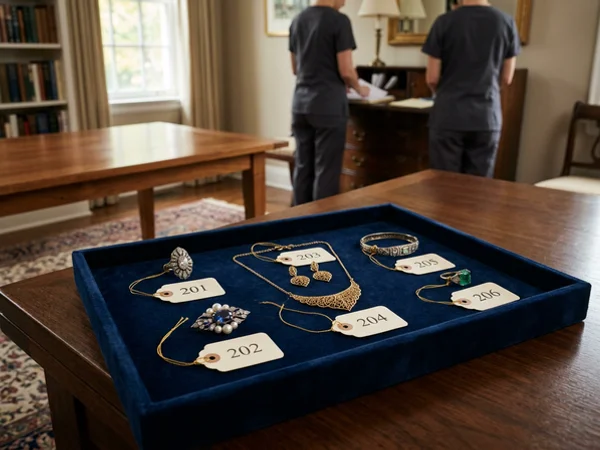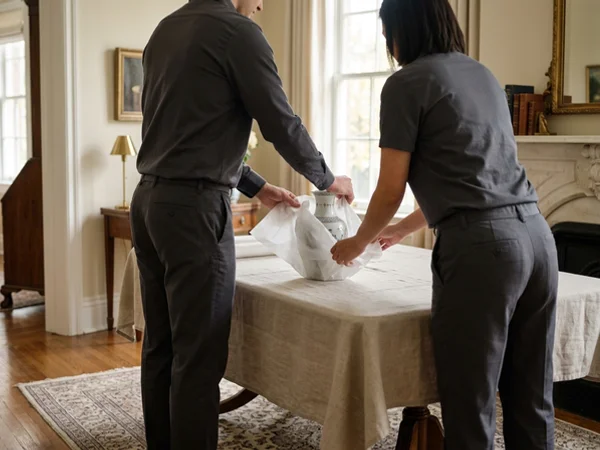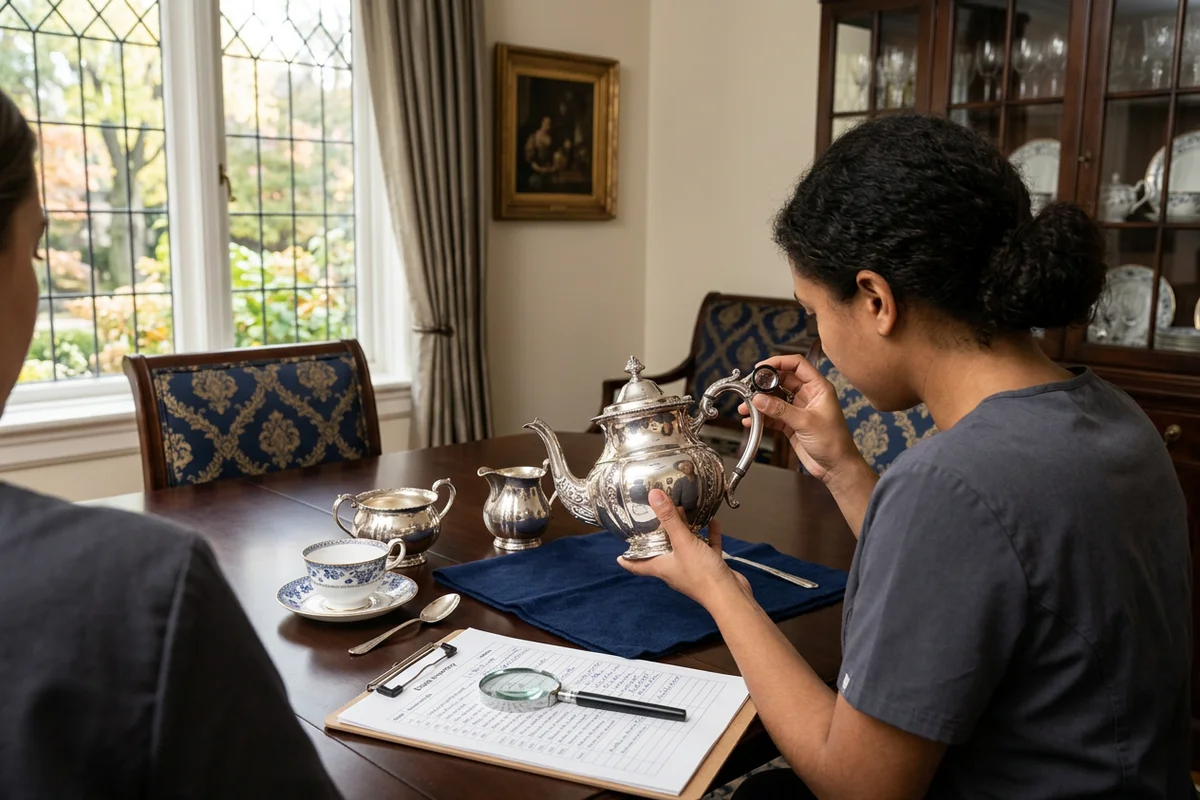
Estate Clearing Toronto identifies valuable contents before anything leaves your loved one's home. Our trained and experienced sorters work through antiques, art, jewelry and vintage categories and record each candidate in an itemized inventory. Items are routed by your instruction as executor to beneficiaries, MaxSold auction or storage. Where a formal valuation is needed for the estate, the inventory gives your lawyer and an independent appraiser a clear starting point, and sentimental items are always held for family review.
What Is Estate Content Appraisal and Inventory?
Every estate has a moment where someone has to decide what things are worth, both in money and in meaning. Estate content appraisal and inventory is how we make that moment orderly. Before the home is cleared, we go through it category by category, identify items that may have resale value, photograph them, and record them in a written inventory. The executor then decides where each item goes.
We are careful with the word appraisal. We do not hold appraisal certifications and we do not issue formal valuations. What we provide is identification and documentation by trained, experienced people who have cleared many Toronto homes. For most estates, that is exactly what is needed. When it is not, our work makes a formal appraisal faster and cheaper.
What Our Appraisal and Inventory Service Includes
Antique identification
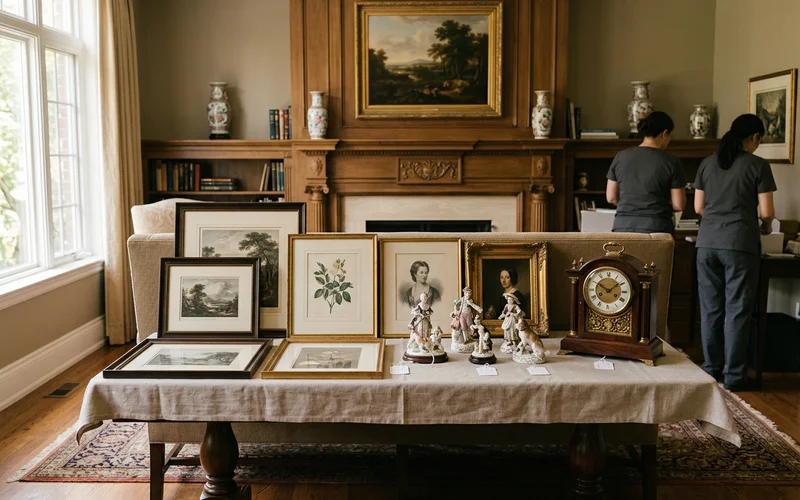
We look for antique furniture, clocks, lamps, mirrors, rugs and decorative pieces, checking construction, maker's marks and condition. Older Toronto homes in Rosedale, Forest Hill, Deer Park and the Kingsway often hold pieces bought generations ago, and their value can surprise a family.
Art inventory
Original paintings, prints, drawings and sculpture are photographed front and back, with signatures, labels and framing noted. Gallery labels and receipts found in the home are kept with the record because provenance can matter to buyers and appraisers.
Jewelry and silver
Jewelry is secured on day one and logged piece by piece. Sterling silver flatware, tea services and serving pieces are checked for hallmarks. Costume jewelry is separated from fine jewelry where the difference is clear, and anything uncertain is flagged for a specialist.
Vintage and mid-century items
Mid-century teak and walnut furniture, vintage lighting, cameras, audio equipment, quality hand tools and collectibles often sell well at online auction. They are also among the items most often thrown out by hauling-first crews, because they look like ordinary old furniture and gear.
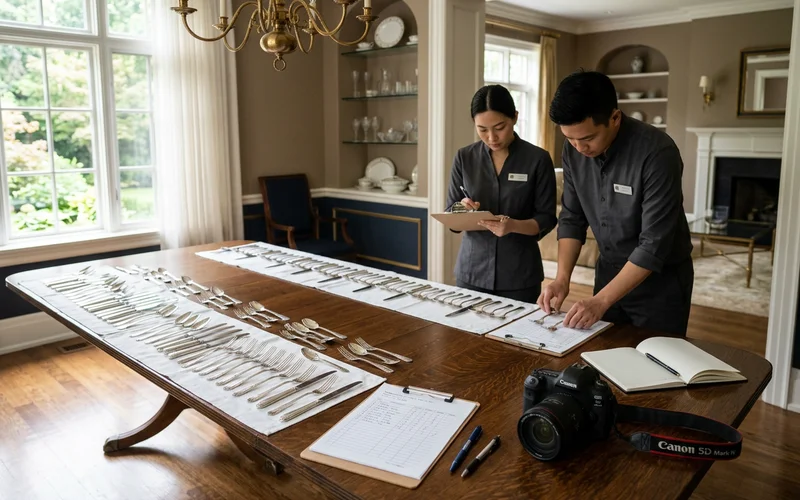
Itemized inventory records
Each identified item is recorded with a photograph, the room it came from, a short description, condition notes and its eventual destination. The inventory is shared with you as it is built, and it becomes part of the executor documentation package at handoff. It also supports your lawyer's work on the personal property inventory and any Estate Administration Tax filings, though we never give tax advice.
Routing to beneficiaries, auction or storage
Once the inventory is reviewed, you decide where each piece goes. Items for beneficiaries are delivered or shipped. Items for sale go to MaxSold online auction, grouped into lots and photographed for listing, at 15% of hammer price with no upfront cost. Items awaiting a decision can go to storage. Every move is recorded.
Inventory or Formal Appraisal: What Do Executors Need?
| Need | Our inventory | Formal appraisal |
|---|---|---|
| Know what is in the home and where it went | Yes | Not designed for this |
| Fair, transparent record for beneficiaries | Yes | Partly |
| Identify auction candidates | Yes | Sometimes |
| Certified value for a court, insurer or tax filing | Starting point only | Yes |
| Cost | Included in clearing scope | Separate professional fee |
Your estate lawyer decides whether a formal valuation is required. In many estates, the inventory plus auction results is enough. Where it is not, the appraiser can start from our photographs and notes rather than from scratch.
Items Often Discarded by Mistake
From our experience across Toronto estates, these categories are most often lost when a home is cleared too quickly: hallmarked silver stored in kitchen drawers, fine china in basement boxes, jewelry hidden in clothing or books, art stored behind furniture, quality tools in garages, records and cameras in closets, and paperwork that proves the value or origin of a piece. Our day-one inventory exists to stop that.
How We Build the Inventory, Room by Room
The inventory is built as the home is sorted, not afterward. In each room, the crew works top to bottom: shelves, cabinets, drawers, closets, then under and behind furniture. Every container is opened. Notable items are photographed in place, then moved to a staging table for closer photographs of marks, signatures and condition. Each item or group gets an inventory line with its room, description, condition and photo references.
| Stage | What happens |
|---|---|
| Walk-through | Crew lead notes rooms likely to hold value |
| Room sort | Every drawer, shelf and box checked |
| Staging | Notable items photographed with marks and labels |
| Logging | Inventory line created with room and description |
| Review | Executor reviews flagged items and chooses destinations |
| Routing | Items go to beneficiaries, auction, storage or appraiser |
This approach also finds papers. Many of the most important documents executors need, such as statements, policies and certificates, turn up in the same drawers and boxes where valuables are kept.
Serving Estates Across the GTA
We inventory estate contents in Rosedale, Forest Hill, Lawrence Park, Yorkville, Casa Loma, Moore Park and across North York, Oakville, Vaughan, Markham and the rest of the GTA. Request a confidential consultation to talk through the contents of the home and what your lawyer has asked for.