
Two Different Tools
Executors often hear the words inventory and appraisal used as if they were the same. They are not. An inventory records what is in the home and where each item goes. A formal appraisal is a certified professional opinion of an item's value, prepared for a specific purpose. Most estates need the first. Some also need the second.
Our estate content appraisal and inventory service provides the inventory and identifies items that may need a formal appraisal. This guide explains the difference so you can decide what your estate needs.

Side-by-Side
| Estate inventory | Formal appraisal | |
|---|---|---|
| Purpose | Record what is there and where it went | Certified value for a specific purpose |
| Who prepares it | Trained, experienced sorters | Qualified independent appraiser |
| Coverage | Whole home, room by room | Selected items |
| Values shown | Auction results, notes on possible value | Professional valuation |
| Typical uses | Executor records, beneficiaries, lawyer's file | Tax reporting, insurance, disputes, specific bequests |
| Cost | Included in our clearing scope | Separate professional fee |
| Time | Built during the clearing | Scheduled separately |
What an Inventory Gives You
An inventory gives you a complete record of the home's contents: each item or group, the room, photographs of notable pieces and the destination. When items are sold through MaxSold, the hammer price becomes a documented market value. Combined with donation receipts and disposal manifests, it shows exactly what happened to the contents.
For many estates, this is all the documentation needed for the contents. Our guide to the personal property inventory explains how it supports your lawyer's work.
When Lawyers Ask for a Formal Valuation
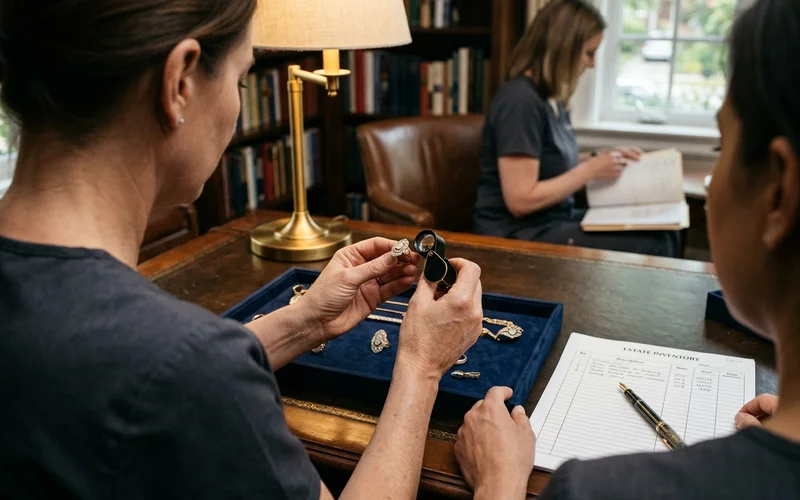
Your estate lawyer may want a formal valuation when:
- A single item, such as a painting or piece of jewelry, may be of significant value.
- Beneficiaries need equal shares and an item is being given in kind rather than sold.
- A specific bequest names an item whose value matters.
- Values are needed for tax reporting and no market sale will occur.
- Beneficiaries disagree about what an item is worth.
In those cases, we flag the items, photograph them, and hold them for the appraiser. The inventory saves the appraiser time.
Ask before you pay for appraisals
Formal appraisals of every item in a home are rarely necessary and can be expensive. Ask your lawyer which items, if any, need one.
Cost and Time Differences
Our inventory is built as the home is sorted, so it adds little time and is included in every scope: $2,500 to $4,500 partial, $4,500 to $9,000 standard, $9,000 to $18,000 large and $12,000 to $25,000 premium. A formal appraisal is a separate fee charged by the appraiser and needs its own appointment, so plan for it early if your lawyer requires one.
Examples: Inventory Alone or Appraisal Too?
| Situation | Usually enough | Why |
|---|---|---|
| Everyday contents, most items donated | Inventory | Low value, clear records |
| Valuables sold at online auction | Inventory and auction statements | Sale price documents market value |
| A painting kept by one beneficiary | Inventory plus formal appraisal | Value needed to keep shares fair |
| Jewelry divided between siblings | Inventory plus formal appraisal | Fairness and possible tax reporting |
| Insurance claim for damaged item | Formal appraisal | Insurer requires certified value |
These are general patterns. Your lawyer makes the call.
Preparing for an Appraiser's Visit
When an appraisal is needed, a little preparation saves time and fees. Gather the flagged items in one room. Keep any receipts, certificates or prior appraisals with them. Share the inventory photographs and notes in advance. Our crew can stage items for the appraiser and record the appraisal reference in the inventory once it is complete.
A Practical Approach
- Build the inventory during the clearing.
- Flag items of possible high value.
- Ask your lawyer which, if any, need a formal valuation.
- Book the appraiser for those items only.
- Sell, give or donate the rest with records.
Most executors need an inventory. Some need an appraisal for a few items. Very few need both for everything. Knowing the difference saves time, money and worry.