
Why Executors Need a Contents Inventory
Most executors focus on the big assets first: the house, bank accounts, investments. But a home also holds personal property, everything from furniture and jewelry to art, silver and tools. As executor, you are responsible for those contents too. Knowing what is there, what it might be worth, and where it went is part of administering the estate properly.
That is why every probate property clearing we do starts with a written inventory. This primer explains what an inventory records, how values are documented, and how the record supports your lawyer and accountant. It is general information only.
Estate Administration Tax in Brief
When an estate applies for a Certificate of Appointment of Estate Trustee in Ontario, Estate Administration Tax is generally calculated on the value of the estate. Which assets are included, how they are valued and what must be reported are questions for your estate lawyer or accountant. We do not give tax advice. What we can do is make sure the contents of the home are recorded clearly, so your professionals have the facts.
What a Contents Inventory Records
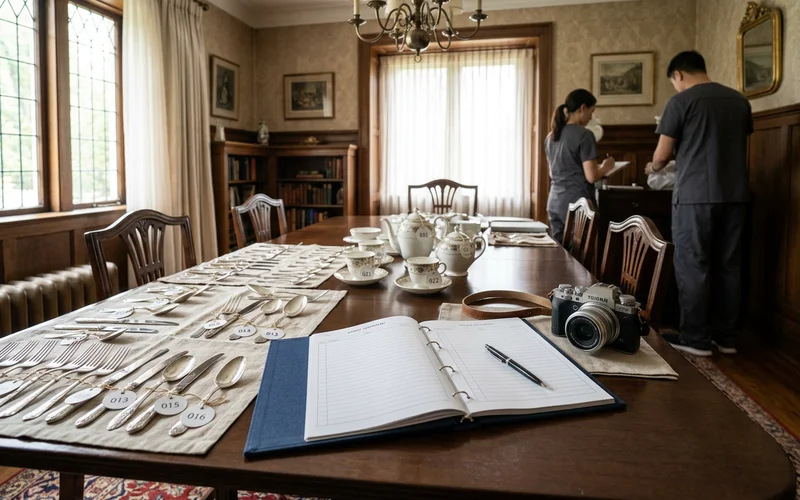
| Field | Example |
|---|---|
| Room | Dining room |
| Item | Sterling silver tea service, five pieces |
| Description and condition | Hallmarked, light wear, original tray |
| Photo reference | IMG 0412 to 0416 |
| Destination | MaxSold auction, wave 2 |
| Supporting record | Auction settlement statement, lot 37 |
Everyday contents such as kitchenware or linens are grouped sensibly. Items with possible value, such as jewelry, art, silver, antiques, collections and quality tools, are listed individually with photographs.
How Values Are Documented
Values come from different sources, and the inventory notes which one applies:
- Auction results. For items sold through MaxSold, the hammer price is a documented market value. Settlement statements show each lot, the 15% fee and the net return.
- Formal appraisals. Where your lawyer requires a certified value, an independent appraiser provides it. Our inventory and photos give them a head start.
- Donation records. Receipts from charities record what was donated, in the estate's name where they issue receipts.
- Disposal manifests. Items with no resale or donation value are recorded as disposed.
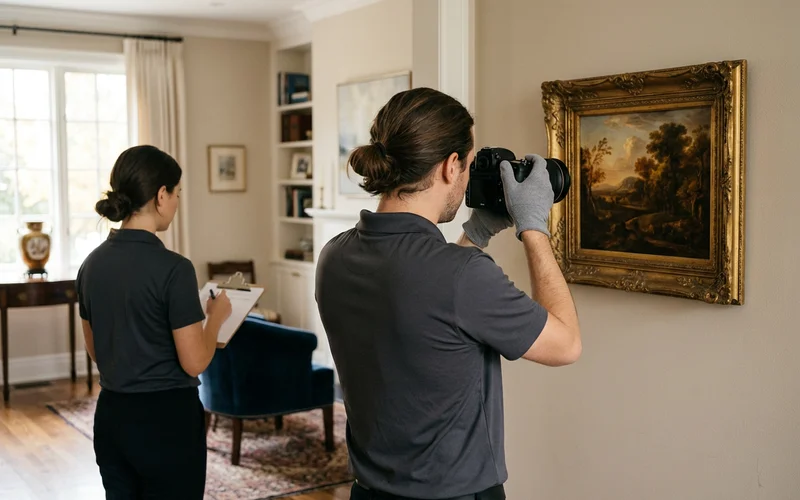
Our sorters are trained and experienced, not certified appraisers. We note items that may need a formal valuation, and your estate inventory is designed to be handed directly to an appraiser if one is needed.
Handing records to your professionals
At the end of the clearing, you receive the inventory, auction statements, donation receipts and disposal manifests in one package. With your authorization, we can send copies to your estate lawyer and accountant directly.
When to Build the Inventory
The inventory is most useful when it is built early, before anything leaves the home. Securing valuables and documenting contents can usually begin while the probate application is being prepared. Dispersal follows when your lawyer advises.
Common Mistakes With Contents
- Clearing before recording. Once items are gone, it is hard to show what they were.
- Guessing values. Informal estimates are not evidence. Auction results and formal appraisals are.
- Losing receipts. Donation receipts scattered across family members are hard to reconcile.
- Mixing family gifts and estate dispersal. Items given to beneficiaries should be recorded like everything else.
What Your Lawyer and Accountant May Ask
Professionals working on an estate often ask similar questions about household contents. Having answers ready saves time and fees.
| Question | Where the answer comes from |
|---|---|
| What was in the home at the date of death? | The inventory and photographs |
| Were any items given to beneficiaries? | Beneficiary and shipping records |
| What did items sell for? | Auction settlement statements |
| What was donated, and to whom? | Donation summary and receipts |
| What was disposed of? | Disposal manifests |
| Are any items worth a formal appraisal? | Items flagged in the inventory |
Keeping the Inventory Accurate
An inventory is only useful if it is accurate. Ours is built as the home is sorted, not reconstructed afterward. Each item or group is recorded when it is handled, with its room and destination. Photographs are tied to inventory lines. When a beneficiary claims an item, the claim is added. When an auction wave closes, results are added. The result is a living record that matches what actually happened.
A Clear Record Protects You
A personal property inventory is not glamorous, but it is one of the most useful documents an executor can have. It answers beneficiaries' questions, supports your lawyer and accountant, and shows that the contents were handled carefully. Our documentation package has, according to a referring Bay Street probate lawyer, survived three probate court audits without issue.