
Three Parties, One Plan
A probate property clearing usually involves three parties: you as executor, your estate lawyer, and the clearing crew. When they work in step, the house is cleared on time and the records support the estate. When they do not, the executor ends up passing messages back and forth and fielding questions no one can answer.
This guide explains how coordination works in a probate property clearing, what your lawyer needs from us, and how you stay in control.
Step 1: Your Authorization
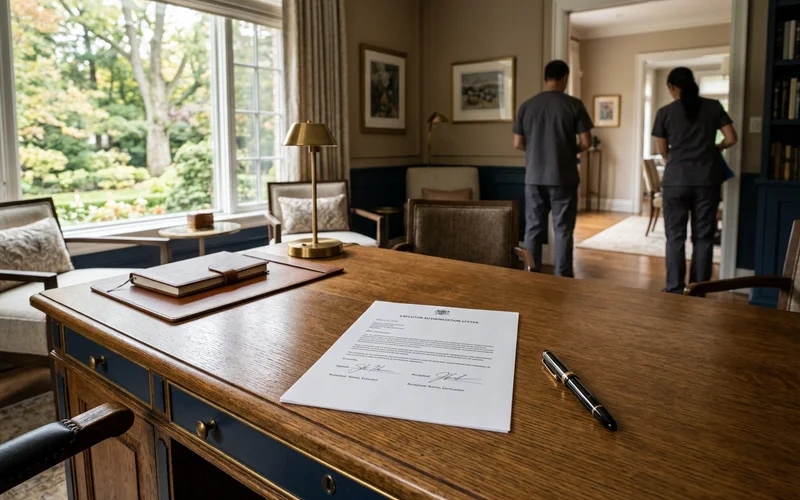
We do not contact your lawyer without your permission. At booking, you can authorize us in writing to speak with the lawyer about the schedule, access to the property and the records. You decide the scope: some executors want us to coordinate everything, others want only the final records sent.
Step 2: Timing and Deadlines
Your lawyer will often set the dates that matter: when dispersal can begin, when a filing is due, when the property must be vacant for a sale. We build the clearing schedule backward from those dates, with buffer days. If dates change, the lawyer or you tell us, and we adjust.
| What the lawyer sets | How we respond |
|---|---|
| When dispersal can begin | Securing and inventory happen first; auction and donation wait |
| Filing deadlines | Schedule planned backward with buffer days |
| Closing date requiring vacant possession | Broom-clean handoff set before closing |
| Specific bequests | Named items set aside and delivered first |
| Valuation requirements | Items flagged for an independent appraiser |
Step 3: Records Delivered
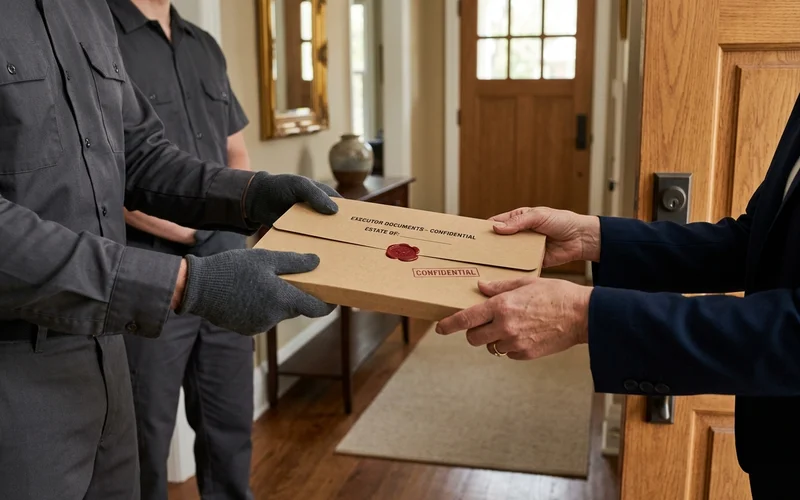
At the end of the clearing, your lawyer can receive the full documentation package directly, with your authorization:
- Itemized inventory by room, with photos of notable items.
- Auction settlement statements, showing each lot's hammer price, the 15% fee and net return.
- Donation receipts, collected in the estate's name where charities issue them.
- Disposal manifests for recycled and disposed items.
- Delivery and shipping records for items given to beneficiaries.
Why Lawyers Refer Estates to Us
Dr. James K., a probate lawyer at a Bay Street firm, refers 2 to 3 estates a month to us. He reports that our documentation package has survived three probate court audits without issue, and he calls us his cleanup compliance insurance. Lawyers value the same thing executors do: a clear record of where every item went.
You remain the decision-maker
Coordination with your lawyer does not shift decisions away from you. We take instructions from the executor. The lawyer advises you; we carry out your instructions and keep everyone informed.
Questions Lawyers Commonly Ask Us
- When can the property be vacant?
- Have any papers or valuables been found that affect the estate?
- Which items have been delivered to beneficiaries, and when?
- What did each auction lot return?
- Are there any items held pending a family decision?
Because our records are kept as the work happens, we can answer these quickly.
Questions to Ask Your Lawyer About the Home
Before the clearing starts, it helps to ask your lawyer a few questions about the contents. Their answers become the instructions we follow.
- When can items begin leaving the estate's control?
- Are there specific bequests we must honour first?
- Do any items need a formal valuation before sale or distribution?
- How should beneficiaries be notified about claiming items?
- Should auction proceeds be paid into a particular estate account?
- What records would you like to receive, and in what format?
Information Flow During a Clearing
| From | To | What |
|---|---|---|
| Executor | Crew | Instructions and approvals |
| Lawyer | Executor and crew (with authorization) | Timing and legal requirements |
| Crew | Executor | Updates, findings, decisions needed |
| Crew | Lawyer (with authorization) | Schedule updates and final records |
| Crew | Realtor (with authorization) | Handoff date and access |
The executor stays at the centre of every line in this table.
When You Do Not Have a Lawyer Yet
Some executors call us before they have chosen a lawyer. We can still secure the home, find papers and build an inventory, which your lawyer will find useful when you engage one. We do not recommend specific lawyers, but our executor services records are designed to fit how estate lawyers work.
Good coordination is mostly about clear permission, clear dates and clear records. With those in place, the clearing becomes one of the smoother parts of administering an estate.