How to Use This Checklist
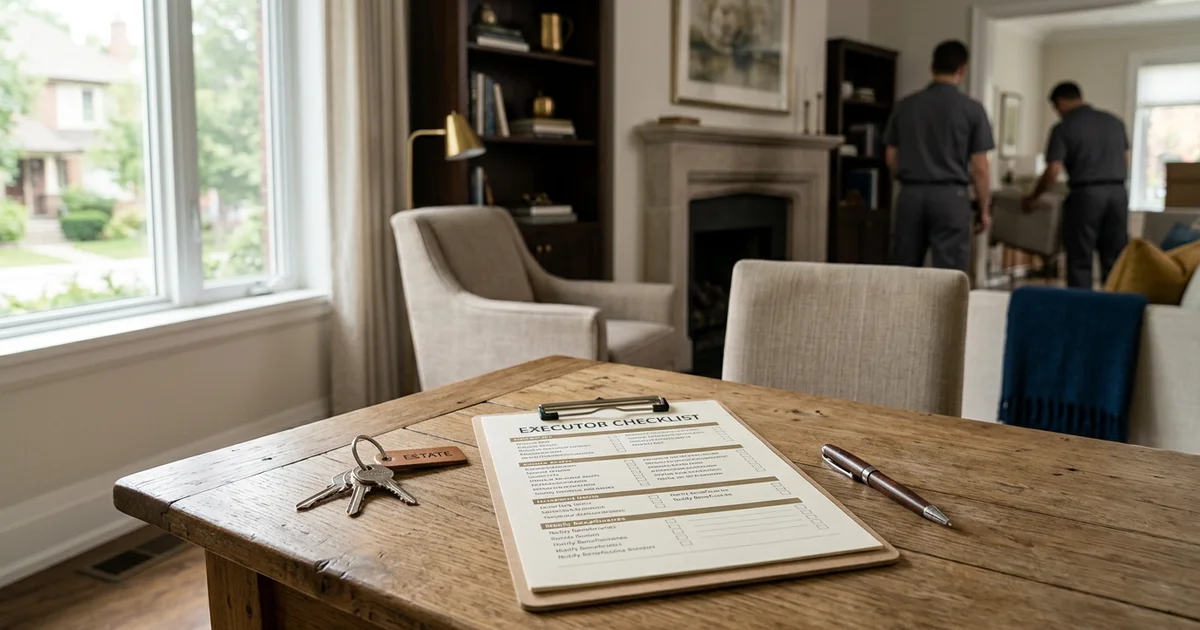
Executors in Ontario have many legal and financial duties. This checklist covers one part of the job: dealing with the contents of the home. It follows the order we use in our executor services, from securing the property to handing over the keys. Print it, tick it off, and bring it to your consultation. It is practical guidance, not legal advice, so confirm timing with your estate lawyer.
Step 1: Secure
- Lock all doors and windows; account for every key.
- Consider changing locks if many people have had access.
- Call the home insurer about vacancy terms.
- Arrange mail forwarding or regular collection.
- Keep heat on in cold months; consider shutting off water if the home will be empty long-term.
- Secure jewelry, cash, watches, firearms and important papers.
- Record what you removed and where it is now.
Step 2: Inventory
- Book an estate clearing consultation for a room-by-room walk-through.
- Build an itemized inventory, with photographs of notable items.
- Locate financial papers: bank, investment, insurance, pension, tax.
- Look for the most recent will, codicils and notes about wishes.
- List items mentioned in specific bequests.
Step 3: Notify Beneficiaries
- Confirm with your lawyer when and how beneficiaries should be told.
- Share the photo inventory of keepsakes and notable items.
- Invite beneficiaries to claim items by a set date.
- Record every claim in writing.
- Set aside disputed items until you decide.

Step 4: Appraise and Identify Value
- Have trained sorters identify auction candidates before anything is donated.
- Ask your lawyer whether any items need a formal, certified appraisal.
- Decide which items go to auction, estate sale or beneficiaries.
- Keep sentimental items separate from items valued for sale.
Step 5: Disperse
- Get your lawyer's go-ahead before items leave the estate's control.
- Deliver or ship items to beneficiaries; record each one.
- Sell valuables through MaxSold auction or an estate sale.
- Donate usable items to Habitat for Humanity ReStore, Salvation Army, Toronto Goodwill or furniture banks.
- Recycle or dispose of the rest, separating hazardous materials.
Step 6: Document
- Collect auction settlement statements.
- Collect donation receipts in the estate's name.
- Collect disposal manifests.
- Compile delivery and shipping records for beneficiaries.
- File everything together in one package for your lawyer and accountant.
Our documentation package explains each of these records and who uses them.
Step 7: Hand Off
- Confirm the home is empty and broom-clean.
- Walk through with your realtor or the buyer's representative if required.
- Collect all keys, garage remotes and access cards.
- Cancel or transfer utilities as advised.
- Send the documentation package to your lawyer, with your authorization.
Timeline at a Glance
| Step | Typical timing |
|---|---|
| Secure | First days to first weeks |
| Inventory | First weeks to first months |
| Notify beneficiaries | Before dispersal; confirm with lawyer |
| Appraise | Alongside inventory |
| Disperse | When your lawyer advises |
| Document | Throughout, compiled at the end |
| Hand off | On the date set by your listing or closing |
What an estate clearing team takes off your list
Most of steps 2, 4, 5 and 6 can be done for you: the inventory, auction identification, deliveries, donations, disposal and the documentation package. You keep the decisions; we do the work and the paperwork.
Common Executor Pitfalls
- Throwing things out early, before papers and keepsakes are found.
- Letting beneficiaries take items informally, without a record.
- Donating before checking for value, losing auction proceeds.
- Losing receipts, which your accountant will ask for.
- Paying rush fees that were not in the original quote. Some companies add $400 to $800; ask for a written quote that rules them out.
The Checklist in Practice: A Typical Toronto Estate
Checklists are easier to follow when you can picture them in a real home. Here is how the seven steps usually play out for a 3-bedroom house in Leaside or Davisville, owned by one family for 40 years, with the executor living in Ottawa.
Weeks 1 and 2: secure. The executor changes the locks, collects the mail and calls the insurer about vacancy terms. A family member who lives nearby removes jewelry and the obvious important papers and writes down what was taken.
Weeks 2 to 4: inventory. A free consultation is held, with the executor joining by video. Our crew returns for an inventory visit: every room is photographed, financial papers are gathered into labelled folders, and notable items are logged. The executor now knows what is in the house without having been there.
Weeks 4 to 8: notify and review. With the estate lawyer's guidance, the photo inventory is shared with the three beneficiaries. Each claims the items they want. Two siblings want the same painting, so it is set aside and recorded as held while the executor decides.
Weeks 8 to 12: appraise and disperse. Auction candidates are listed on MaxSold in a single wave. Claimed items are delivered locally or shipped. Donations go to Habitat for Humanity ReStore and Salvation Army with receipts. Paint and electronics are separated for proper handling.
Week 12: document and hand off. The home is broom-clean on the date the realtor needs. The executor receives the binder: inventory, beneficiary records, auction statement, donation receipts and disposal manifest. The lawyer receives a copy directly.
| Step | Who does it | What the executor does |
|---|---|---|
| Secure | Executor or family | Changes locks, calls insurer |
| Inventory | Estate clearing crew | Joins the walk-through, reviews photos |
| Notify | Executor with lawyer | Shares inventory, records claims |
| Appraise | Crew, appraiser if needed | Approves auction list |
| Disperse | Crew | Approves deliveries and donations |
| Document | Crew | Receives the package |
| Hand off | Crew with realtor | Final walk-through |
The details change from estate to estate, but the order rarely does. Following it protects the family's keepsakes, the estate's value and your position as executor.
Keeping Beneficiaries Informed at Each Step
Many disputes between beneficiaries start with silence. A short written update at each stage of the checklist, even a few lines by email, prevents most of them. Let beneficiaries know when the home has been secured, when the inventory is ready to view, the deadline for claiming items, when auctions are running and when the house will be handed over. Keep copies of those messages with your estate records. If a question comes up months later, you will be able to show that everyone had the same information at the same time.
Getting Help With the Checklist
You do not have to work through this list alone. A free, 90-minute consultation will show which steps we can take on, how long they will take, and what the written itemized quote looks like. Many executors find that once the house is in hand, the rest of the estate feels far more manageable.