When Someone Else Holds the Pen
Sometimes a parent can no longer make decisions about their home and belongings. A stroke, dementia or a sudden decline can leave an adult child acting as attorney for property under a power of attorney. In that role, you may need to arrange a move into care, clear the family home and handle your parent's belongings, often while managing your own grief and your siblings' feelings.
This guide explains what to expect when senior downsizing services work with an attorney for property. It is not legal advice. Your lawyer should confirm what your authority covers before you sign anything.
Who Signs the Quote
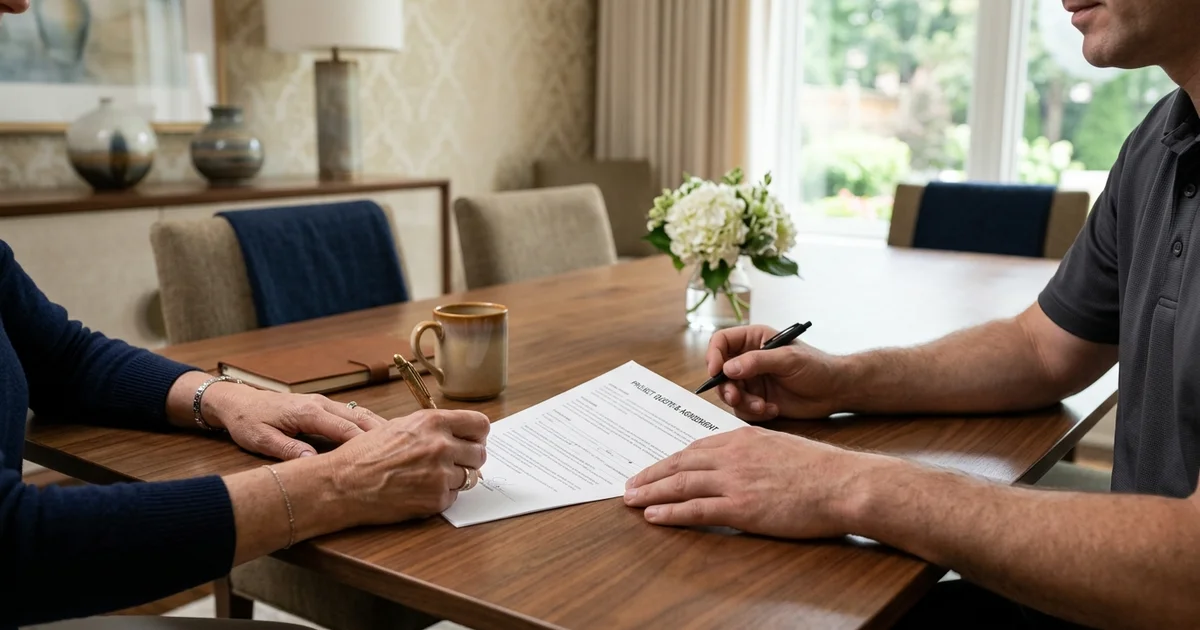
We take instructions from the person with legal authority over your parent's property. In practice that is usually the attorney named in a continuing power of attorney for property. When you book, we ask who holds that authority and may ask you to confirm it in writing. If more than one person is named and must act jointly, we take instructions from both.
Where your parent is able to take part, we include them. We sort at their pace and record their wishes. Final instructions come from the attorney, but a parent who feels heard is far more comfortable with the move.
Documenting Decisions for the Family
Acting under a power of attorney carries responsibility to act in your parent's interest and to keep proper records. Siblings may later ask why something was sold, given to a cousin or donated. Clear records protect you.
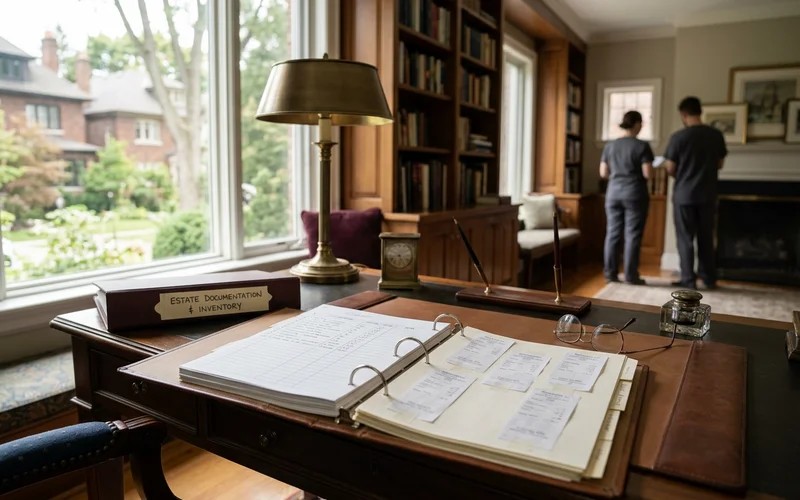
Every downsizing project produces a record of:
| Record | What it shows |
|---|---|
| Inventory | What was in the home, room by room |
| Move list | What went to your parent's new suite |
| Family distribution | Which items went to which relative, with photos |
| Auction statements | What sold, for how much, and the 15% fee |
| Donation receipts | What was donated and to which charity |
| Disposal manifests | What was recycled or disposed of |
This is the same structure as our executor documentation package, adapted for a living owner.
Keeping Siblings Informed
Transparency prevents most family disputes. With your approval, we can share:
- A photo inventory of keepsakes and notable items before decisions are made.
- Written updates after each sorting session.
- The final records at the end of the project.

When siblings want the same item, we set it aside and record it until you decide. We never take instructions from individual siblings unless you authorize it.
Money From Sales Belongs to Your Parent
Items sold through MaxSold online auction are sold on your parent's behalf, and proceeds go to them, less the 15% coordination fee. Auction statements show each lot, so the money is easy to account for. Donation receipts are requested in your parent's name where charities issue them. Your parent's accountant decides how those receipts are used.
Confirm your authority first
A power of attorney for personal care is different from a power of attorney for property, and the document itself may set limits. Ask a lawyer to confirm what you can do before you sell, donate or give away your parent's belongings.
What the Process Looks Like
The work follows the same stages as any senior downsizing move: consultation, sorting, floor plan planning for the new suite, dispersal, move-day setup, and clearing the former home. The difference is that the attorney gives the instructions and every decision is recorded with that in mind. Projects are priced from hourly sort and pack at $85 per sorter per hour, with a 3-hour minimum, through our partial ($2,500 to $4,500), standard ($4,500 to $9,000) and large ($9,000 to $18,000) tiers.
A Steady Hand for a Hard Role
Acting for a parent who can no longer act for themselves is one of the hardest things an adult child can do. A careful, well-documented process will not make it easy, but it will make it fair, and it will leave you with records you can stand behind. When you are ready, a free consultation can include your parent where possible, and your siblings if you wish.