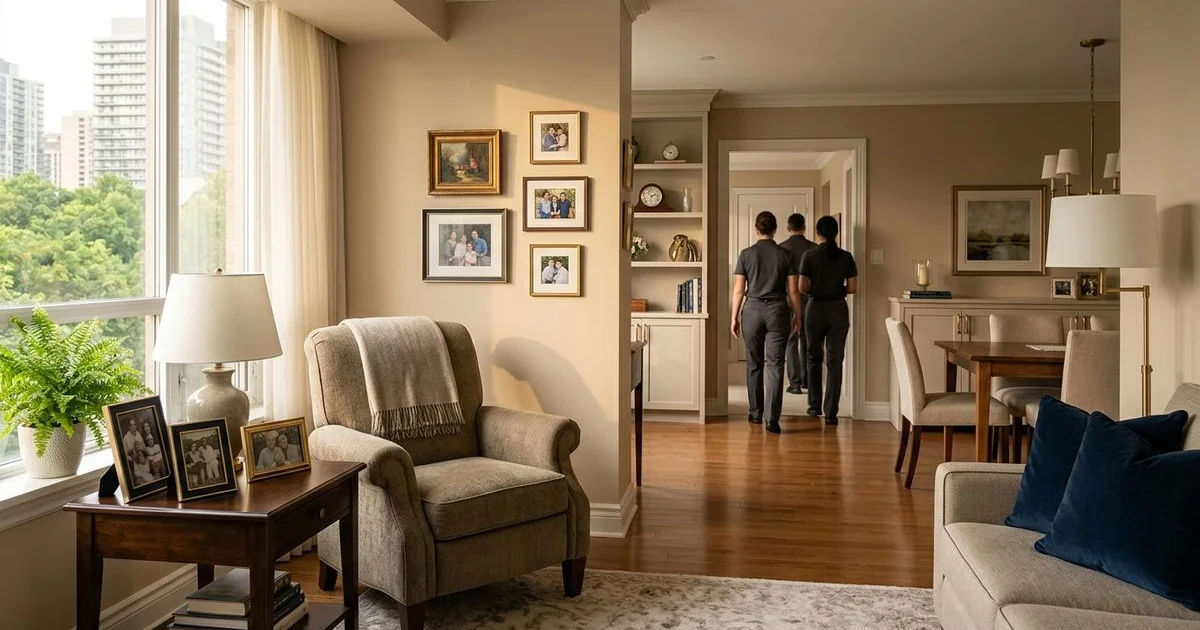
From a House to a Suite
A typical retirement or assisted living suite in Toronto is a fraction of the size of the family home it replaces. Deciding what fits is one of the hardest parts of the move, practically and emotionally. A careful plan turns it from a painful purge into a thoughtful choice about what makes a place feel like home.
This is the core of our senior downsizing services: plan first, pack second, and have the new suite ready before your parent arrives.
Step 1: Get the Floor Plan
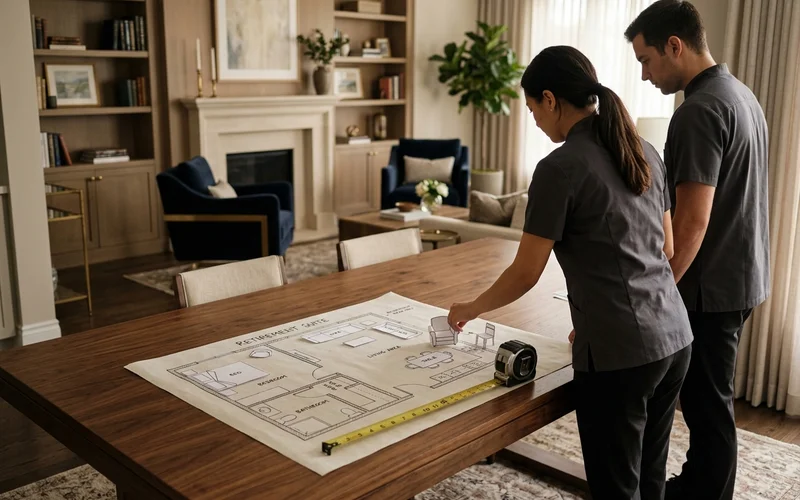
Ask the residence for the suite's floor plan with measurements, or measure it yourself. Note windows, outlets, closets, radiators and where the door swings. Many suites have limited wall space, so the plan matters more than square footage.
Step 2: Map Furniture to the Space
We measure your parent's favourite pieces and place them on the plan, sometimes with paper cut-outs on a dining table so your parent can see and move them. This prevents the common mistake of moving too much and clearing it again a week later.
What Usually Fits, and What Usually Does Not
| Usually fits | Often too much |
|---|---|
| Their own bed, ideally a single or double | King beds and full bedroom sets |
| One favourite armchair | Full sofa and loveseat sets |
| A small dresser and night table | Armoires and tall wardrobes |
| A small table and two chairs | Dining sets for six or more |
| A bookshelf of favourites | Whole libraries |
| Framed photos and a few artworks | Every picture in the house |
| A television and a reading lamp | Large entertainment units |
Step 3: Choose Priority Keepsakes
Beyond furniture, choose the things that make a room feel like your parent's: photo albums, a quilt, a favourite mug, a clock, a hobby. Margaret S.'s father kept every photo album and the woodworking tools he refused to part with when he moved from Forest Hill to a Yorkville suite.
Step 4: Plan for Everything Else
Before the move, items not going to the suite are photographed and offered to family. Out-of-town relatives approve by photo and items are shipped. Pieces with value, such as mid-century furniture, silver or art, can go to MaxSold auction at 15% of hammer price with no upfront cost. Usable items go to Habitat for Humanity ReStore, Salvation Army and Toronto Goodwill with receipts. Large and antique pieces are handled by our furniture removal team.
Step 5: Set Up Before Move-In Day
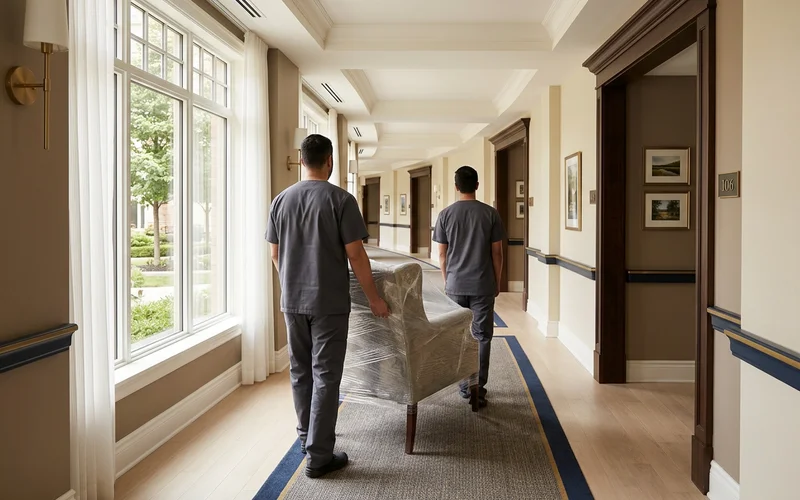
On move day, our crew delivers and places furniture according to the plan, hangs familiar pictures, unpacks clothes into closets and makes the bed. When your parent walks in, the room is ready.
Night one matters
Margaret S.'s father slept in his own bed on the first night in his new suite. For many parents, that single detail sets the tone for the whole transition.
Residence Rules to Check
- Move-in dates and elevator bookings.
- Rules on furniture types, rugs and wall hanging.
- Electrical items allowed in suites.
- Storage lockers available to residents.
Smaller Spaces, Smarter Storage
Retirement suites usually have less closet and drawer space than a family home. A few choices make the space work better:
- Choose furniture with storage. A bed with drawers or a cabinet with doors keeps the suite tidy.
- Edit the wardrobe by season. Keep the current season close and store the rest with family if needed.
- Bring favourite books, not the whole library. A single bookshelf of well-loved titles feels more like home than boxes in a closet.
- Keep hobby supplies within reach. If your parent knits, paints or does puzzles, make space for it.
- Leave room to move. Clear paths matter for safety, especially with a walker or wheelchair.
Personal Touches That Make a Suite Feel Like Home
Beyond furniture, small things carry the most comfort: a familiar quilt, a favourite lamp, framed photos placed where your parent can see them from bed, a clock that has always been on the mantel, a plant from the old garden. When we set up a suite, we place these first and build the room around them.
After the Move
Once your parent is settled, the former home is cleared and left broom-clean, ready for a realtor. Most family homes fall in our partial ($2,500 to $4,500) or standard ($4,500 to $9,000) tier for the full downsizing, and hourly help is available at $85 per sorter per hour for smaller jobs.
Deciding what fits is really deciding what matters. With a plan on paper and help with the lifting, your parent can make those choices calmly, and arrive somewhere that already feels like home.