
Why the Conversation Stalls
For many parents, the family home holds their whole adult life. Suggesting a move can sound like suggesting they are no longer capable, or that their memories are clutter. That is why so many families put the conversation off until a crisis forces it.
The aim is not to win an argument. It is to help your parent feel in control of a decision that is theirs. Experienced senior downsizing services can help with the work, but the conversation comes first, and it belongs to the family.
Approaches That Help
Start with their goals, not yours
Ask what your parent wants the next few years to look like. More time with grandchildren? Less worry about snow? Fewer stairs? Frame downsizing as a way to get there.
Talk about what they will keep
Instead of starting with what has to go, start with what comes along. Favourite chair, photo albums, the piano, the garden tools. When Margaret S. helped her father move from a 4-bedroom Forest Hill home to a Yorkville assisted living suite, he kept every photo album and the woodworking tools he refused to part with.

Keep it a series of conversations
One big talk rarely works. Several short ones over weeks, each with one small step, usually do.
Use specifics, not judgments
"The stairs worry me after your knee surgery" works better than "this house is too much for you".
Offer choices
Two or three residences to visit. A move this spring or next fall. Hourly help to start, or a full plan. Choices restore a sense of control.
Phrases to Try and to Avoid
| Try | Avoid |
|---|---|
| "What would make day-to-day life easier?" | "You can't manage this house anymore." |
| "What would you want to take with you?" | "You need to get rid of all this stuff." |
| "Can we sort one closet together?" | "We'll deal with the house." |
| "Let's look at a few places, no decisions." | "We've found you a place." |
Involving Siblings
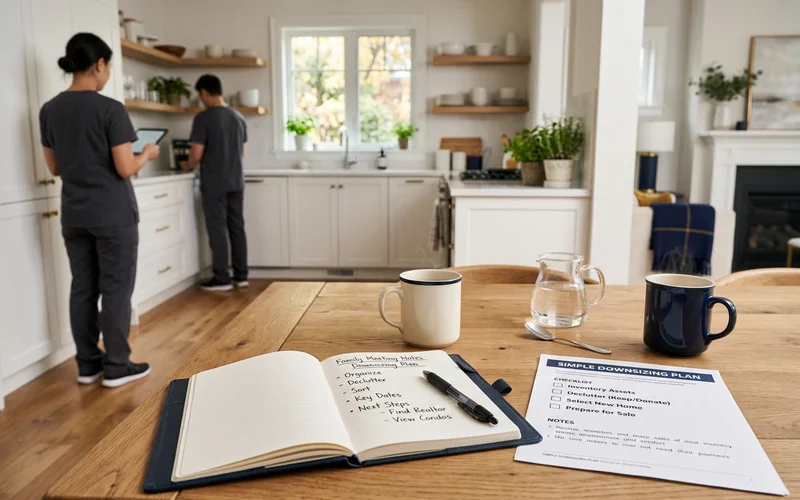
Before talking to your parent, siblings should agree on the concern, the message and who will lead. Disagreement in front of a parent gives them every reason to stay put. Once you agree, include everyone who wants to help, and give each person a role: visiting residences, handling finances, or sorting with your parent.
When Your Parent Says No
A first no is common and should be respected. Keep the door open: offer to help with one room, or invite your parent to visit a residence just to see it. Hourly sort and pack at $85 per sorter per hour, with a 3-hour minimum, lets you start with a closet rather than a move. Many parents agree once they see that sorting can be gentle and that they stay in charge.
When safety changes the timeline
If there are falls, unsafe cooking, or missed medications, involve your parent's doctor. A professional voice can help your parent see the risk without it feeling like a family judgment.
Common Objections and Gentle Responses
| What your parent may say | A gentle response |
|---|---|
| "I'm not ready." | "That's fine. Could we just sort one closet together?" |
| "I don't want strangers in my house." | "You'd be there the whole time, and you decide everything." |
| "What will happen to all my things?" | "Let's start with what you want to keep. The rest can go to family or people who need it." |
| "This is my home." | "It is. Let's talk about what would make it easier to live here, too." |
| "Your father built that workshop." | "Then let's make sure his tools go somewhere he'd be proud of." |
When You Are Not the Only Voice
Sometimes a parent listens more easily to someone outside the family: a doctor, a trusted friend, a faith leader or a professional who has helped other families. There is no failure in that. What matters is that your parent feels respected and in control of the decision, whoever helps them get there.
What Happens Once They Agree
Once your parent is ready, the work follows a clear path: sorting with them present, planning the new suite, distributing items to family, donating and auctioning the rest, setting up the suite before move-in, and clearing the former home. Our guide to the downsizing process explains each step and how long it typically takes.
The best downsizing moves are the ones where a parent feels respected the whole way through. The conversation is where that starts.