Why Online Auctions Became the Norm
Not long ago, selling an estate's valuables meant hauling furniture to an auction house or opening the home to crowds for a weekend sale. Online auctions changed that. Buyers browse photos and bid from home, and only winning bidders come to the property, at a set time, to collect what they bought.
Our estate auction coordination uses MaxSold, a widely used online auction platform in Ontario. Here is how the process works from start to finish.
Step 1: Identification
On the first day of an estate clearing, trained and experienced sorters walk the home and identify items with resale value: antiques, art, silver, jewelry, mid-century furniture, tools, collectibles and more. Candidates are logged before anything is moved. Sentimental items are held back for family review first, so nothing a beneficiary wants is listed.
Step 2: Cataloguing and Lots
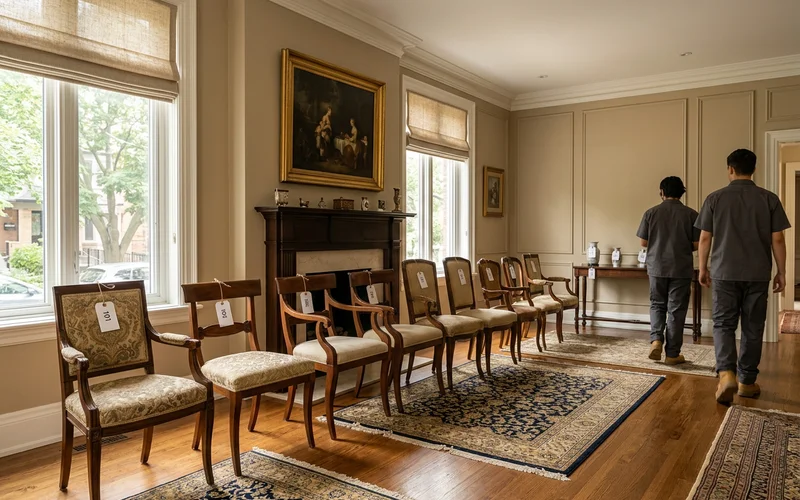
Items are cleaned of dust and grouped into lots. Grouping matters: a single item may attract little interest, while a well-chosen lot draws more bidders. Each lot gets a number, a clear description and honest condition notes.
Step 3: Photography
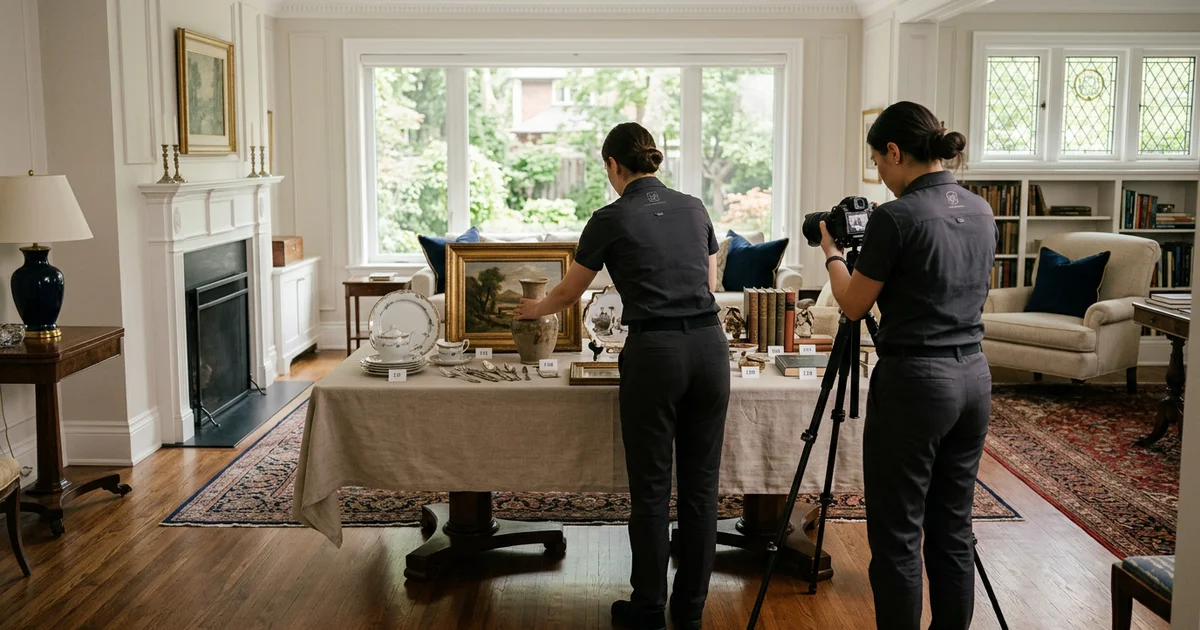
Good photos sell lots. Items are photographed in good light against a neutral background, with close-ups of maker's marks, signatures and any wear. Buyers who can see clearly bid with confidence.
Step 4: The Bidding Window
The auction is listed online for a bidding window, typically several days. Buyers place bids, and the highest bid when the window closes wins each lot. The market sets the price, which is often more than a family would have guessed.
Step 5: Pickup Day
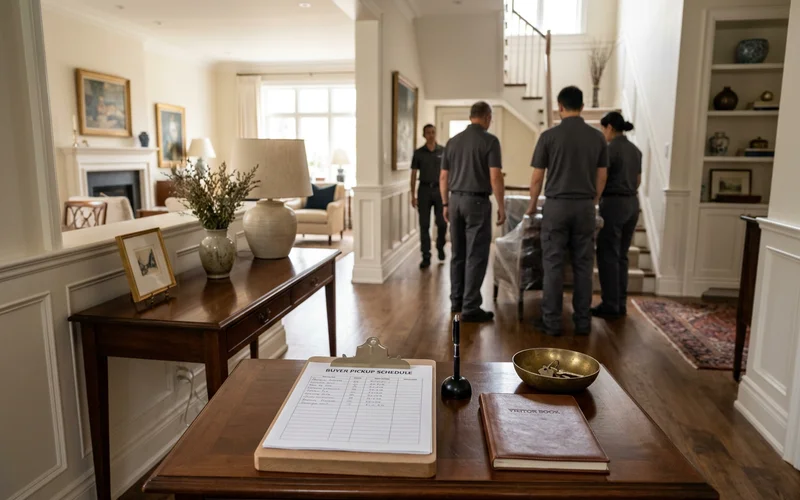
Winning buyers book a time slot on a scheduled pickup day. Our crew supervises at the door, checks each buyer's lot numbers and makes sure they take only what they bought. Private rooms are closed and keepsakes have already been removed. Neighbors see a few cars over a few hours, not a crowd.
Step 6: Payout and Statements
After pickup, proceeds are settled. The coordination fee of 15% of hammer price is deducted, and the net returns to the estate. A settlement statement lists every lot, its hammer price, the fee and the net amount, and goes into the executor documentation package.
The Process at a Glance
| Stage | What happens | Who does it |
|---|---|---|
| Identify | Value spotted on day one | Our sorters |
| Catalogue | Lots grouped and described | Our crew |
| Photograph | Clear listing photos | Our crew |
| Bid | Online bidding window | Buyers |
| Pickup | Scheduled, supervised collection | Buyers, supervised by our crew |
| Settle | Proceeds less 15%, statement issued | Recorded for the executor |
Auction Waves on Large Estates
Large estates often run more than one auction. The first wave may cover the most valuable rooms, while sorting continues elsewhere. The Thompson family estate in Lawrence Park ran 3 MaxSold auction waves and returned $38,000 in proceeds, while still being delivered broom-clean 2 days before the probate filing deadline.
Unsold lots
Not every lot sells. Unsold items can be relisted in a later wave, donated to Habitat for Humanity ReStore, Salvation Army or Toronto Goodwill with receipts, or recorded as disposal, on the executor's instruction.
Common Questions From Executors
How long does the whole auction take? From cataloguing to pickup, usually about two weeks for a single wave, depending on the size of the estate and the platform's schedule.
Can we set a minimum price? Online estate auctions usually rely on competitive bidding rather than reserves. If an item needs a minimum, it may be better sold another way or appraised first.
What if a buyer does not pick up? Unclaimed lots are handled under the platform's rules, and we record what happened in the settlement records.
Can family members bid? Policies vary, and it can create awkward questions among beneficiaries. Talk to the executor and your lawyer first.
How We Group Lots for Better Results
| Item type | Typical lot approach |
|---|---|
| Valuable single items (art, jewelry) | Listed alone |
| Sets (china, flatware, chairs) | Kept together as one lot |
| Tools | Grouped by type or quality |
| Collectibles | Grouped by theme |
| Small decorative items | Grouped into attractive mixed lots |
Is Online Auction Right for Your Estate?
Online auction suits estates with items of real resale value. Everyday household goods often do better as donations. Our guide on what sells at auction helps you judge which contents are worth listing.