Why Security Matters at an Estate Sale
An estate sale invites the public into a family home. Most buyers are honest and respectful, but crowds make it easy for small valuable items to disappear, for private rooms to be wandered into, and for floors and woodwork to be damaged. Good estate sale preparation builds security in from the start.
The Five Pillars of Estate Sale Security
1. Closed-off rooms
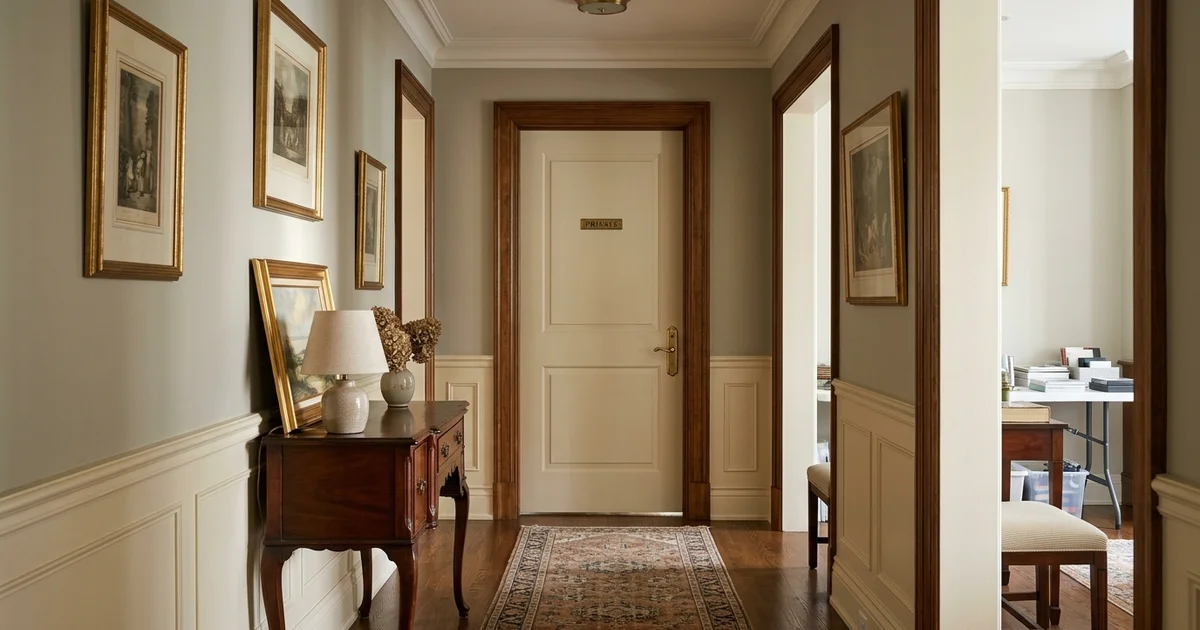
Every room not in the sale is closed and marked private: bedrooms with personal items, studies with papers, and any room holding keepsakes or items set aside for beneficiaries. Staff keep buyers to the open route.
2. High-value item handling
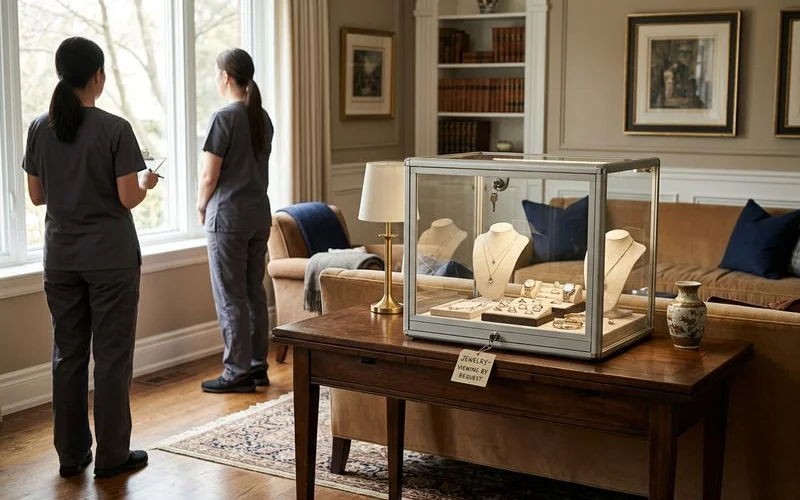
Small, valuable items are the most at risk. Fine jewelry, watches, silver and small collectibles go in locked display cases under supervision, near checkout, or are removed to online auction. Larger valuable pieces are tagged "sold" or "not for sale" if they are being kept.
3. Entry control
One entrance, one exit, and staff at the door. We manage how many buyers are inside at one time, which keeps rooms easy to supervise and keeps the experience calm. A line outside is better than a crowd inside.
4. Staffing
Staff are placed in each open area and at checkout. Buyers pay at a single point, and items are checked against tags as they leave.
5. Protecting the home
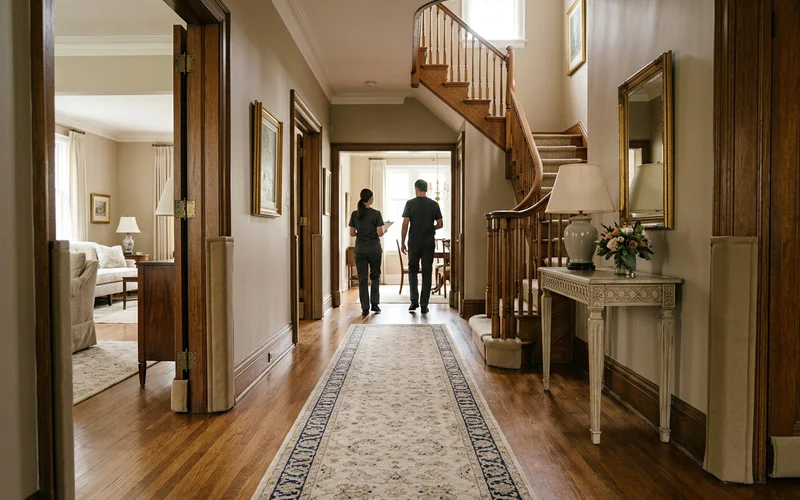
Floor runners protect hardwood and carpet. Padding covers tight corners, banisters and door frames, especially in older Toronto homes with heritage woodwork. Furniture is moved only by staff.
Security Checklist
| Before the sale | During the sale | After the sale |
|---|---|---|
| Remove keepsakes and papers | Staff at the door | Check closed rooms |
| Close and mark private rooms | Staff in each open area | Reconcile sales against tags |
| Secure jewelry and small valuables | Single checkout point | Secure the home overnight |
| Lay floor runners and padding | Manage numbers inside | Route unsold items |
| Remove items going to auction | Keep exits clear | Record results for the executor |
When security concerns are high
If the home holds many small valuables, or the family is uneasy about strangers inside, an online auction may be a better fit. Our comparison of MaxSold vs estate sale explains the trade-offs.
Insurance and Liability
Ask whoever runs the sale about insurance. We are fully WSIB covered with $2M liability insurance, and every crew member is background-checked and bonded. If you are holding the sale yourself, check with the home insurer about coverage for public events in a vacant home.
Security Planning by Home Type
| Home | Extra precautions |
|---|---|
| Large multi-floor home | Staff on each floor, upper floors closed if not in sale |
| Condo | Building rules on visitors, concierge notified, limited numbers |
| Century home with narrow halls | Fewer buyers inside at once, protected woodwork |
| Home with valuable collection | Collection sent to online auction instead of the sale |
After the Doors Close
Security does not end when the last buyer leaves. At the end of each sale day, staff walk every room, check closed rooms are untouched, reconcile sales against tags, and lock the home. Cash is counted and secured. Any problems are reported to the executor that evening, not discovered later. On the final day, unsold items are moved out of sale rooms and routed as planned, so the house is never left half-open.
A Calm Sale Is a Successful Sale
Buyers spend more in a calm, organized home than in a crowded one. Good security is not only protection; it is part of what makes the sale work. With private rooms closed, valuables secured and the home protected, the family can let the sale do its job without worry. Security is one part of a wider plan, covered in our guide on how to prepare for an estate sale.