The Fear Every Family Has
The most common worry we hear is simple: a crew working fast will throw away something that cannot be replaced. A grandmother's recipe cards. A father's letters from overseas. Photographs no one has scanned. It is a reasonable fear, because it happens. Crews paid to empty a house quickly treat everything as volume.
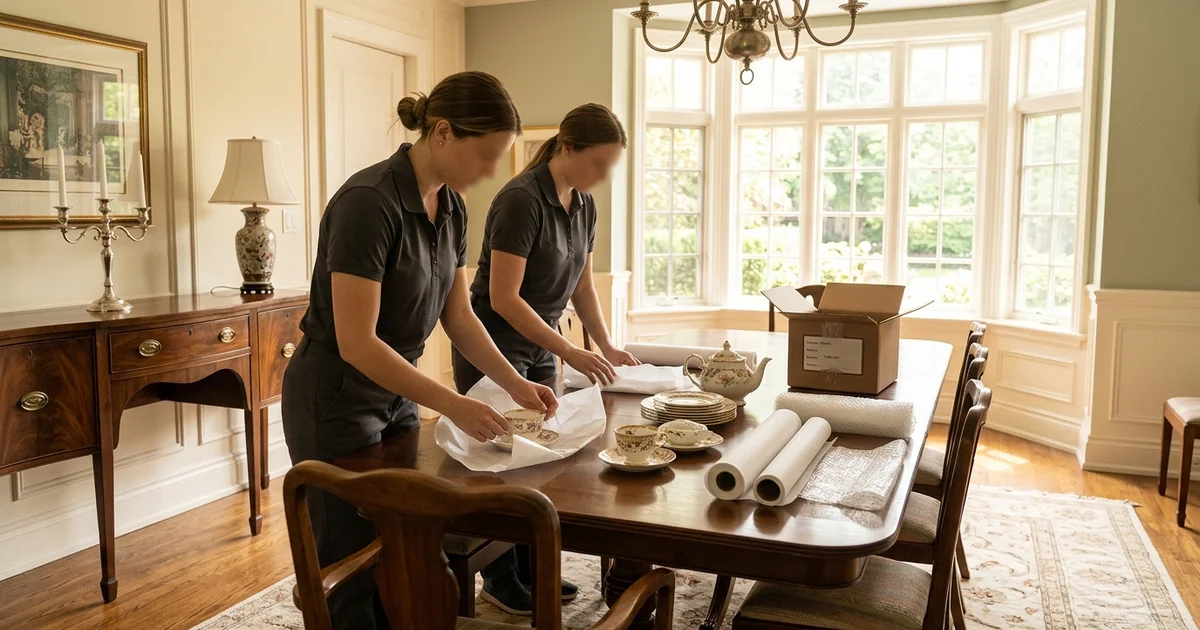
Professional deceased estate clearing works the other way around. Sentimental items are found and protected first, and nothing personal leaves the home until the family has seen it.
What Happened in Rosedale
Richard L. called us in April after his mother passed. A previous crew had torn through his grandmother's china cabinet without asking anyone. We stopped mid-day one, called his daughter, catalogued every piece, and shipped keepsakes to beneficiaries in Vancouver and Boston before continuing. The auction later brought in $14,200 from items the other crew would have discarded.
That story captures both halves of the problem. Sentimental items were at risk, and so was value. Both were protected by slowing down and asking, which is the first thing to check when you choose an estate clearing company.
How a Keepsake Protocol Works
Family-pace sorting
We sort at family pace, not crew pace. That means every drawer, box and pocket is checked before it is emptied. Papers and photographs are set aside. When the family is present, they review items as we go. When they are not, items are held.
A dedicated keepsake area
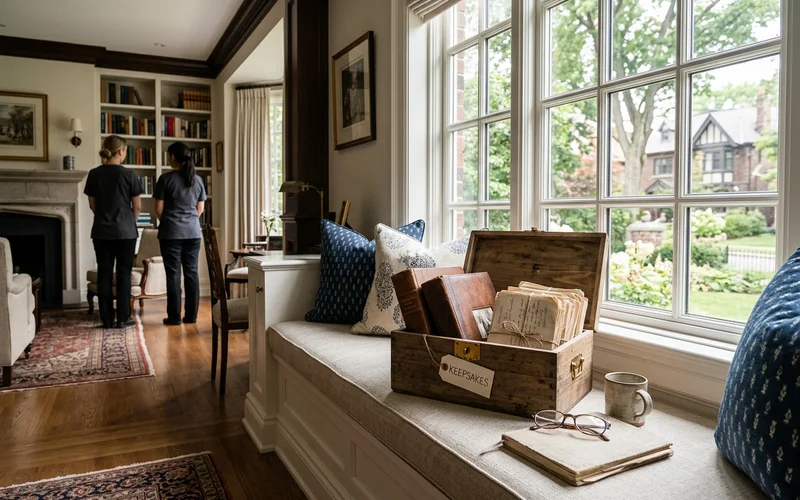
In every home, we set up a keepsake area, usually a spare room or dining room. Labelled boxes hold photos, letters, jewelry, heirlooms and anything flagged by the family. Nothing in the keepsake area is moved without the executor's instruction.
Photo documentation for beneficiaries
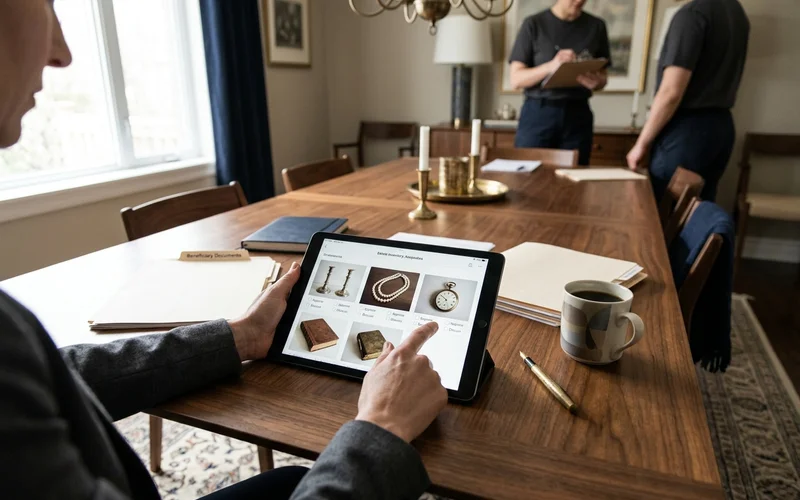
Beneficiaries who cannot visit receive photos of keepsakes and notable items. They claim what they want, the executor approves, and we record the decision. This creates a neutral, shared record that reduces tension between siblings.
Delivery and shipping
Approved items are delivered locally or packed and shipped to heirs elsewhere. Past shipments from our projects have reached Vancouver, Boston, London and Hong Kong. Our guide to shipping keepsakes explains that process in detail.
What Counts as Sentimental?
The answer is different for every family, so our rule is simple: when in doubt, set it aside. Items we always hold for review include:
| Category | Examples |
|---|---|
| Photographs and film | Albums, loose prints, slides, home movies, negatives |
| Writing | Letters, diaries, cards, recipe cards, notes in books |
| Jewelry and personal items | Rings, watches, cufflinks, glasses, wallets |
| Service and achievement | Medals, certificates, uniforms, trophies |
| Children's and grandchildren's items | Artwork, report cards, toys, baby clothes |
| Everyday objects with a story | A favourite chair, a coffee mug, a toolbox, a garden hat |
Our rule
Nothing sentimental is discarded without family review. If it might matter to someone, it waits.
When Family Cannot Be Present
Many executors live far away or cannot face the house yet. That is fine. The keepsake protocol was built for it. You receive photos and written updates, approve decisions remotely, and receive your items by delivery or shipping. Catherine Delacroix, who leads our estate clearing division, personally attends the first day of every estate valued over $8,000 to make sure the crew understands what the family has asked us to protect.
Keepsakes and Fairness Between Beneficiaries
Sentimental items can cause more family tension than valuable ones, because they cannot be divided or replaced. A neutral process helps. Photograph keepsakes before anyone takes anything. Share the photos with every beneficiary at the same time. Let each person say what they would like, and give the executor time to decide. When two people want the same item, set it aside and record it as held. Some families take turns choosing; others make copies of photographs and letters so everyone can have one. Whatever approach your family chooses, writing it down protects relationships.
Digitizing Photos and Letters
Many families decide to scan photo albums, letters and home movies so every beneficiary can have a copy while the originals go to one person. We set these items aside in labelled boxes so a family member or a scanning service can digitize them before they are divided. It is one of the simplest ways to make sure no one loses access to the family's history.
What You Can Do Before We Arrive
- Write down anything the family already knows it wants: a ring, a painting, a quilt.
- Tell us where your loved one kept important things, if you know.
- Do not start bulk clearing. Untrained sorting often moves sentimental items into bags and boxes where they are harder to find.
- Decide who will make final decisions, usually the executor.
Losing a person is hard enough. Losing the things that remind you of them should not be part of it. When you are ready, a confidential consultation will show you exactly how we would protect your family's keepsakes.