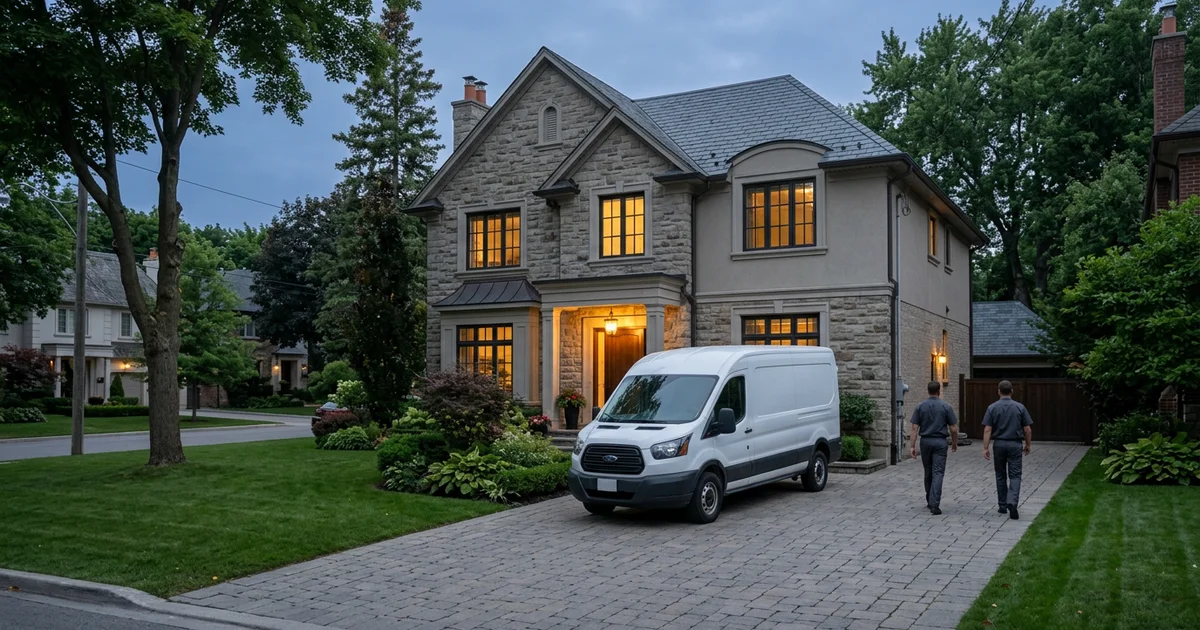
The Risk of an Empty House
After a death, a home can sit empty for months while probate moves forward. Empty homes attract attention: mail piling up, no lights at night, an unmowed lawn or uncleared snow. They are also vulnerable to the slow problems no one notices, such as a dripping pipe, a furnace failure in January, or pests moving in.
As executor, you are responsible for protecting estate assets, and the home and its contents are often the largest ones. This guide covers practical steps. Professional deceased estate clearing can help with the parts that involve the contents.
Secure the Valuables First
The single most important step is to secure small, high-value items early: jewelry, cash, watches, important papers, firearms (which have legal handling requirements) and anything the family has identified as precious. Record what was removed and where it went.

Our crews often do this as a first visit, separate from the full clearing. We locate and log valuables and papers, and either hand them to the executor or place them in a locked container on site.
Check Insurance Vacancy Terms
Many home insurance policies limit or change coverage when a home has been vacant for a set period. Call the insurer early, tell them the owner has died and the home is vacant, and ask what they require. Common requirements include regular inspections, heat maintained in winter, and water shut off. This is a conversation for you and the insurer; we cannot advise on coverage.
Make the Home Look Lived-In
| Step | Why it helps |
|---|---|
| Forward or collect mail | Piled mail signals vacancy and can expose financial information |
| Light timers | Lights in the evening make the home look occupied |
| Lawn and snow care | An untended yard is a visible sign |
| Regular visits | Catch leaks, pests and break-ins early |
| Discreet vehicles | Branded trucks announce that a home is being emptied |

Why Unmarked Vehicles Matter
When contents are being sorted or removed, a branded truck parked outside for days tells the whole street that the home is being emptied, and often why. Our crews arrive in plain white unmarked vans and plain charcoal uniforms. To neighbors, it looks like any other moving day.
After-hours help
If something happens at a secured estate property, or a probate deadline creates urgency, after-hours response is available. Regular hours are Monday through Saturday, 8 AM to 7 PM.
Should You Clear the Home Early?
Some executors decide to clear sooner because the risk of keeping a full, empty home outweighs waiting. Others secure valuables and wait. The right timing depends on your estate, and your lawyer should guide decisions about dispersal. Our guide to clearing before probate explains the difference between securing and dispersing in more detail.
Seasonal Risks for Toronto Homes
| Season | Main risks | Simple precautions |
|---|---|---|
| Winter | Frozen pipes, furnace failure, snow piling up | Keep heat on, arrange snow clearing, regular visits |
| Spring | Basement flooding, roof leaks | Check sump pump, clear downspouts |
| Summer | Overgrown lawn, heat, visible vacancy | Lawn care, timers, mail collection |
| Fall | Leaves blocking drains, early freezes | Clear eavestroughs, check heating |
What to Record During Each Visit
Keep a short log of each visit to a vacant estate home: the date, who visited, the temperature setting, anything unusual such as leaks, damage or signs of entry, and any items removed. If an insurer or beneficiary asks later, the log shows the home was cared for. When our crew attends, we record our visits in the same way.
A Simple Checklist for Executors
- Change or secure the locks and account for all keys.
- Secure valuables and papers, and record them.
- Call the insurer about vacancy terms.
- Arrange mail forwarding or collection.
- Set light timers and arrange yard care.
- Schedule regular visits, especially in winter.
- Book an estate clearing consultation so a plan is ready when your lawyer gives the go-ahead.
Protecting a vacant home is mostly about attention and a few early decisions. With valuables secured and a clearing plan in place, the waiting months become far less stressful.