
When Grief and a Hoarded Home Arrive Together
Some executors walk into their loved one's home for the first time in years and find it filled from floor to ceiling. Others always knew, and dreaded this day. Either way, they face two hard things at once: the loss of a parent or relative, and a house that feels impossible to start.
If that is where you are, you are not alone, and there is a respectful way through it. This guide explains how hoarding estate cleanup differs from an ordinary estate clearing and what you can expect.
Understanding the Emotional Side
Hoarding is often linked to loss, anxiety, depression or other health conditions. It is not laziness, and it is rarely a choice in the usual sense. Many families feel a mix of grief, guilt, embarrassment and frustration. Some feel they should have done more. Others are angry that they now have to deal with it.
All of those feelings are normal. What helps is a team that does not add to them. Our crews are trained to work without comment or judgment, and our Zero Judgment policy is written into every quote.
What Makes the Work Different
Volume
A hoarded home can contain many times the contents of an ordinary home. Rooms may be unusable, hallways narrowed to paths, and storage spaces packed solid. The sheer volume means the project takes weeks rather than days.
Hidden importance
Inside that volume are the things an executor most needs: bank statements, insurance policies, a will, cash, jewelry, photographs. People who hoard often keep important items mixed in with everything else. Bulk removal is how these get lost forever.
Safety
Blocked exits, heavy loads on floors, mould from leaks no one could reach, pests and unstable piles can make a hoarded home unsafe. Family members should not start sorting before a trained crew has assessed the home.
Discretion
Neighbors may already be curious. Families often want the work to happen as quietly as possible.
How We Approach a Hoarded Estate
1. Assess first. A senior crew lead walks the home, identifies safety concerns and plans safe access.
2. Clear safe pathways. Exits and main routes are opened so the crew and family can move safely.
3. Sort section by section. Each section is sorted completely before moving on. Every item goes into a stream: family, possible value, donate, recycle or dispose.
4. Set aside everything important. Papers, photos, jewelry, cash and keepsakes are logged and held for the executor.
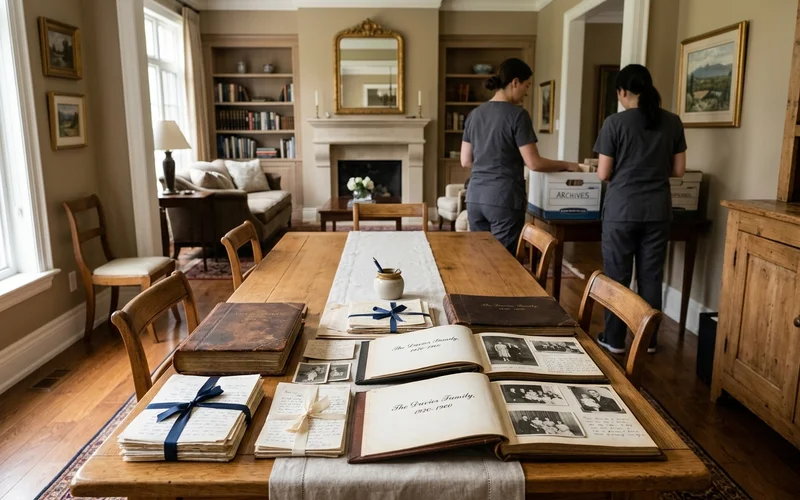
5. Separate hazards. Old paint, chemicals, batteries and electronics are separated for proper handling.
6. Donate generously. Usable items go to Habitat for Humanity ReStore, Salvation Army, Toronto Goodwill and furniture banks with receipts.
7. Check in with the family. Weekly check-ins let the family review what has been found and confirm decisions.
8. Hand back broom-clean. The home is left empty and swept, ready for listing or renovation, with the documentation package.
The Beaches: A Real Example
Patricia M.'s mother passed with 20 years of accumulated belongings in her Beaches home. We worked under our Zero Judgment policy through a dignified sort over 3 weeks. Eight truckloads of donations went to Habitat ReStore and Salvation Army, keepsakes and papers were set aside for the family, and the house was handed back broom-clean, ready for her brother's listing. Patricia sent us 4 referrals that fall.
Discretion With Neighbors
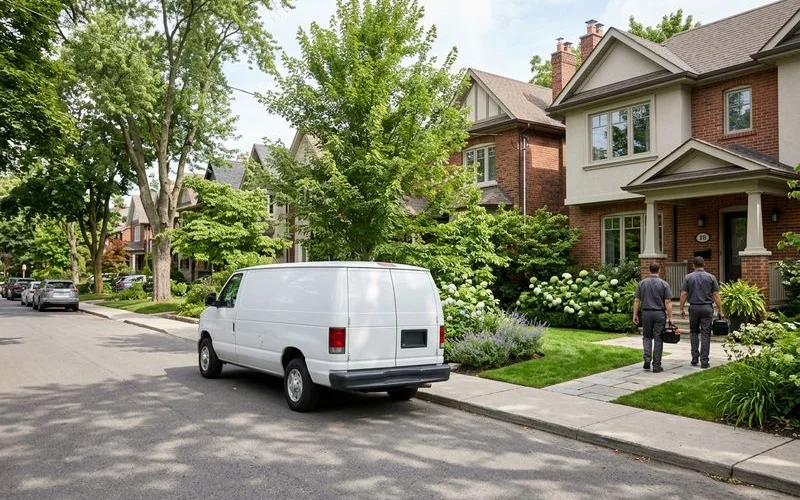
Multi-week projects are visible, so discretion matters. Our vans are plain white with no branding. Crews wear plain charcoal uniforms, park considerately and do not discuss the home outside it. Loading is done efficiently, and we do not leave piles at the curb.
Language That Respects Your Loved One
We talk about the home and the belongings, not the person. You will not hear our crews use labels or jokes. In our records, we describe items and rooms factually. Your loved one was more than the state of their home, and we treat them that way.
You do not need to tidy first
Please do not try to clean or sort before we arrive. It is not expected, and untrained sorting often moves important papers into bags where they are harder to find.
Cost and Timeline
| Situation | Tier | Range | Typical timeline |
|---|---|---|---|
| Lighter accumulation, 2-3 bedrooms | Standard | $4,500 to $9,000 | 1 to 2 weeks |
| Heavy volume, 4+ bedrooms | Large | $9,000 to $18,000 | 2 to 4 weeks |
| Hoarding and estate overlap, multi-week sort | Premium | $12,000 to $25,000 | 3 weeks or more |
Auction recovery on valuables found in the volume can offset part of the cost, and donation coordination is always included.
Supporting the Family Through the Weeks
A multi-week project is a long time for a grieving family. A few practices make it easier. We agree on one point of contact in the family, usually the executor, so messages do not get lost between siblings. We schedule check-ins at a regular time each week, so the family knows when decisions will be asked for and can rest in between. And we tell the family about meaningful finds as we go, such as a box of letters or a wedding album, rather than saving everything for the end.
Families who live far away receive photos and written summaries. Families who live nearby can visit a cleared room, never the middle of the volume. Nobody is asked to make decisions while standing in the hardest part of the house.
| Week | What the family usually sees |
|---|---|
| 1 | Safe pathways created, first papers and photos found |
| 2 | Main rooms sorted, keepsake boxes ready for review |
| 3 | Storage spaces cleared, donation and disposal recorded |
| Final | Broom-clean walk-through and documentation package |
Taking the First Step
The hardest part is usually the phone call. The consultation is confidential, free and comes in an unmarked vehicle. We have seen many homes like your loved one's. Our only focus is finding what matters to your family and finishing safely and respectfully.