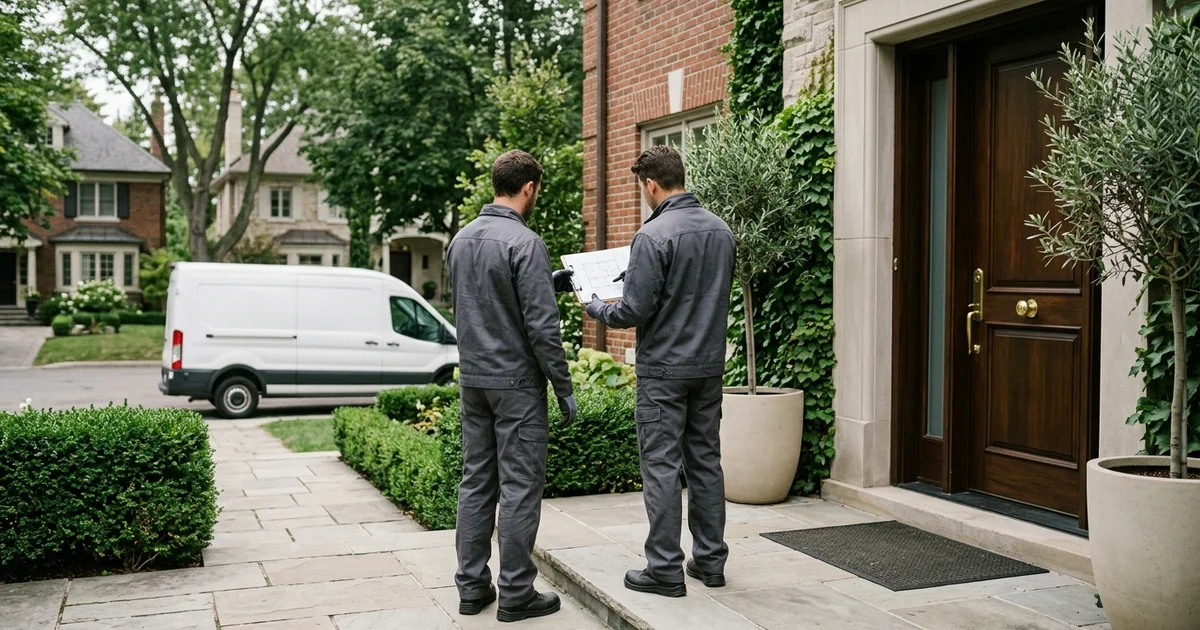
Before You Open the Door
An executor's instinct is often to go straight into a loved one's home and start looking for papers. In a hoarded home, that instinct can be dangerous. The risks are real, and most are invisible from the doorway. This guide explains what to watch for and why a trained hoarding estate cleanup crew should enter first.
It is general safety information, not a professional inspection. If you have any doubt about a home's condition, stay out and get advice.
The Main Risks
| Risk | What it looks like | Why it matters |
|---|---|---|
| Blocked exits | Doors and hallways narrowed or closed by stacked items | Hard to get out in an emergency |
| Unstable piles | Tall stacks of boxes, papers or furniture | Can shift or fall when disturbed |
| Structural load | Heavy accumulation on upper floors | Floors may be stressed |
| Mould and moisture | Musty smell, stains, leaks that could not be reached | Breathing irritation, damaged materials |
| Pests | Droppings, nesting, insects | Health risk and contamination |
| Fire risk | Paper near heaters, overloaded outlets | Greater fire load in the home |
| Hidden sharps and hazards | Broken glass, tools, needles from medical use | Cuts and injury |
| Utilities | Unknown condition of gas, wiring, plumbing | Leaks, shocks, flooding |
Why a Trained Crew Enters First
Our crews work in pairs or teams, wear appropriate protective equipment, and start by assessing access. The first job is not sorting. It is making the home safe enough to sort: opening exits, clearing a main pathway, noting weak floors, finding the electrical panel and water shut-off, and identifying areas that need extra care.
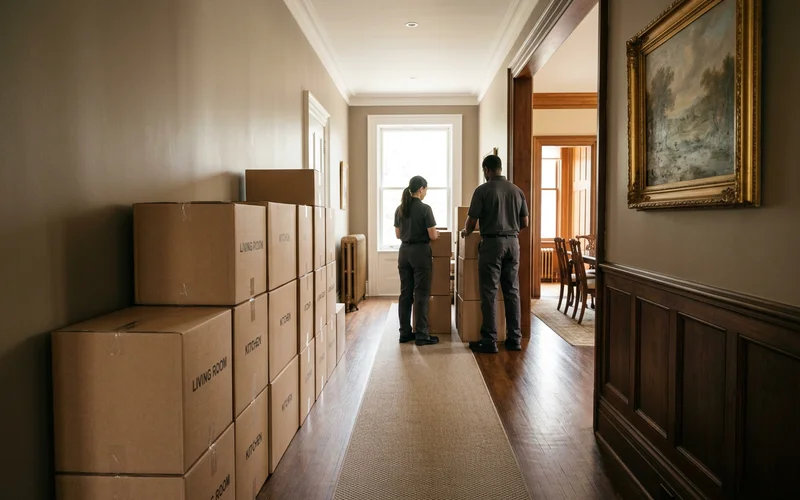
Only once safe pathways exist do we invite family members in for keepsake review, usually to a cleared room where items have already been set aside.
Hazardous Materials Separation
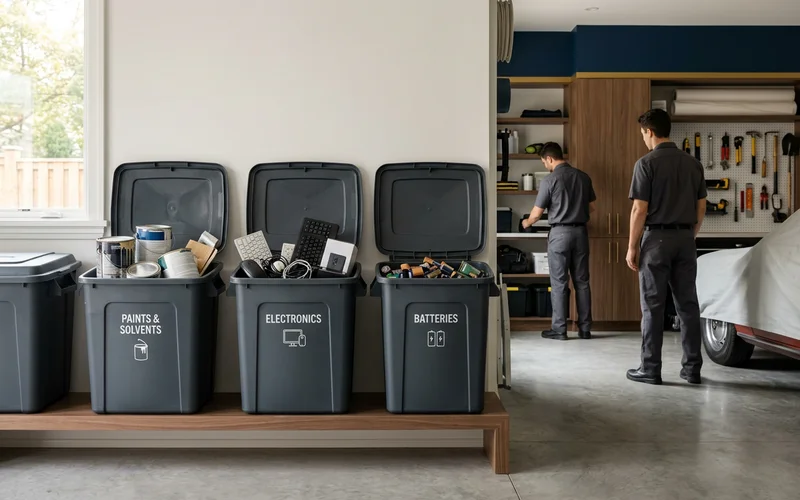
Hoarded homes often contain old paint, solvents, cleaning chemicals, pesticides, propane cylinders, batteries, fluorescent tubes and electronics. These cannot go into general disposal. We separate them into labelled containers as we sort and route them to appropriate drop-off and recycling, recording them in the disposal manifest.
When Specialist Help Is Needed
Some conditions go beyond estate clearing, such as significant mould growth, structural damage or contamination. When we find them, we say so plainly, pause that area, and let you arrange the right specialist. We do not claim training we do not have.
If you must go in before we arrive
Do not go alone. Wear sturdy shoes and gloves. Stay on clear paths near the entrance. Do not move piles or open closed rooms. Leave immediately if you smell gas, see sagging floors or have trouble breathing.
Protecting the Estate, Not Just People
Safety is also about liability. If someone is injured in the home, or a neighbouring property is affected, the estate can be exposed. Hiring a crew with WSIB coverage and liability insurance shifts that risk. We are fully WSIB covered with $2M liability insurance, and every crew member is background-checked and bonded.
What to Tell Us Before We Arrive
The more we know, the safer the first visit. If you can, share:
- Whether anyone has been inside recently, and what they saw.
- Any known leaks, roof problems or flooding.
- Whether utilities are on: power, gas, water, heat.
- Any pets that lived in the home.
- Known medical equipment or medications in the home.
- Whether firearms or weapons may be present.
- Which entrances can be opened.
Even partial information helps the crew plan the right equipment and the safest entry.
How the First Day Usually Runs
| Time | What happens |
|---|---|
| Arrival | Crew lead assesses entrances and exterior |
| First hour | Safe entry path opened, utilities checked |
| Morning | Main pathway cleared to key rooms |
| Afternoon | First section sorted, papers set aside |
| End of day | Executor updated on findings and plan |
A Safe Plan Is a Faster Plan
Families sometimes worry that safety steps slow the project down. In practice, the opposite is true. A home with safe pathways, separated hazards and a clear plan moves steadily, while a home where people start pulling at piles stalls when someone gets hurt or something important is lost. Our guide on how long it takes explains typical timelines once work begins.
Your loved one's home deserves care, and so do you. Let the first step be a confidential consultation, and let a trained crew be the first through the door.