Giving a Loved One's Things a Second Life
Most estate homes hold furniture and household goods that are too good to throw away but not wanted by the family. Donating them helps other households and keeps usable goods out of landfill. The challenge is knowing which charity accepts what, in what condition, and how to get it there.
Our donation coordination routes estate contents to the right partners across Toronto. This guide explains what each type of partner typically accepts. Policies change and vary by location, so we confirm current requirements before every delivery.
Who Accepts What
| Partner | Typically accepts | Often declines |
|---|---|---|
| Habitat for Humanity ReStore | Furniture, appliances, cabinets, lighting, flooring, building materials, tools | Damaged items, mattresses, some upholstered pieces |
| Salvation Army | Clothing, housewares, small furniture, books, linens | Heavily worn items, large appliances at some locations |
| Toronto Goodwill | Clothing, housewares, small electronics, books, toys | Large furniture at some locations |
| Community furniture banks | Beds, dressers, tables, sofas, kitchen basics in good condition | Stained or damaged upholstery, broken items |
Condition Expectations
A simple test: would you be comfortable giving the item to a friend? If so, it is usually suitable for donation. Charities generally look for:
- Furniture that is structurally sound, with no broken legs, missing drawers or major stains.
- Upholstered items that are clean, with no tears, odours or pet damage.
- Housewares that are complete, clean and unchipped.
- Clothing and linens that are clean and wearable.
- Appliances that work and meet current safety standards.
What Usually Cannot Be Donated
- Mattresses and box springs, at most locations.
- Damaged, stained or broken furniture.
- Older cribs and car seats, for safety reasons.
- Hazardous materials such as paint, chemicals and propane.
- Many older televisions and some electronics.
These are recycled where possible, separated for hazardous handling, or recorded as disposal.
How We Route Donations
- Family first. Keepsakes and claimed items are removed before donation.
- Value check. Auction candidates are set aside for MaxSold.
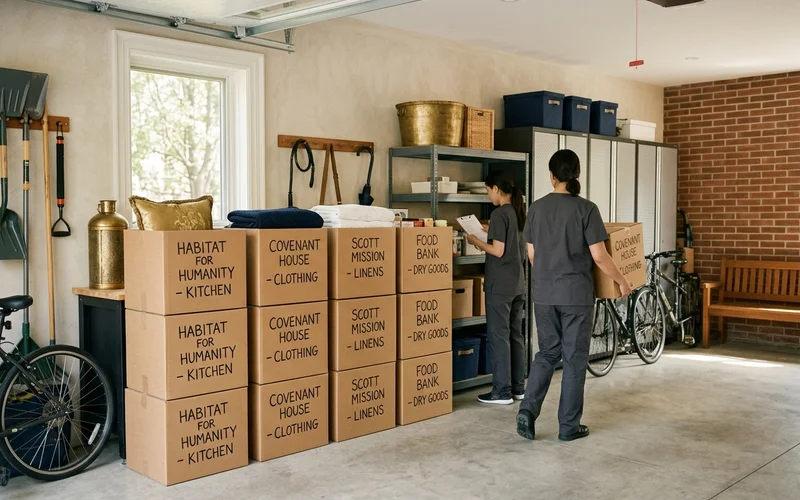
- Sort by partner. Remaining usable items are grouped for the partner most likely to accept them.
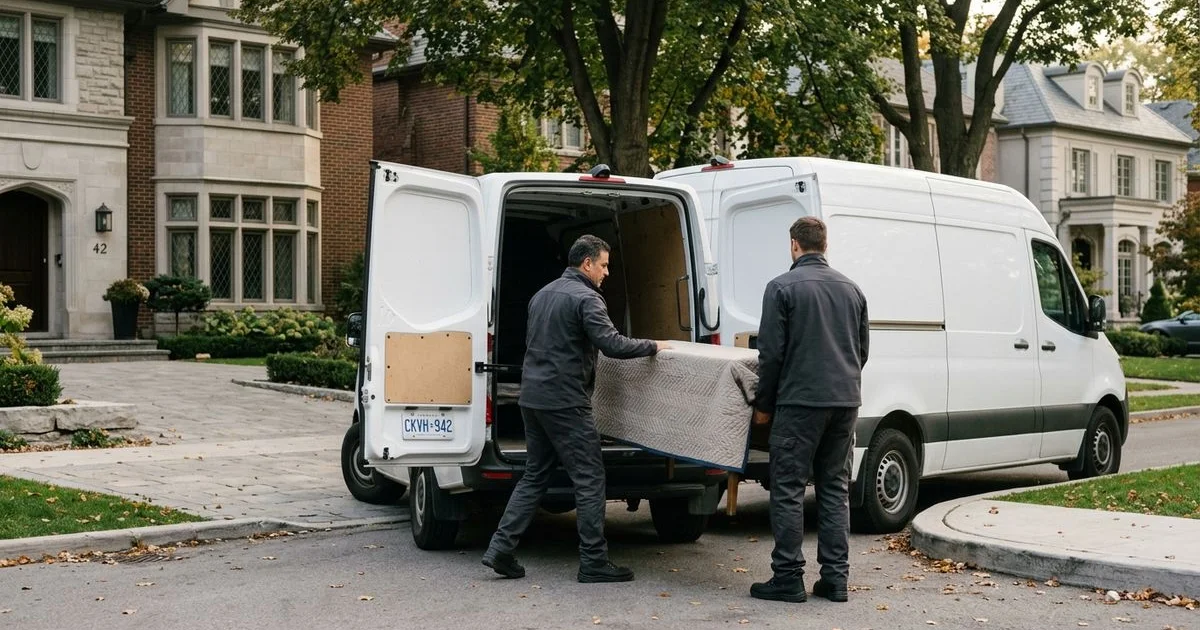
- Deliver. Items travel in plain white unmarked vans to partner locations near the property.
- Receipts. Receipts are requested in the estate's name where the charity issues them.
One family's example
Patricia M.'s mother's home in the Beaches sent 8 truckloads of donations to Habitat ReStore and Salvation Army during a 3-week estate clearing. Patricia said knowing her mother's things would help other families made those weeks easier.
Preparing Furniture for Donation
A little preparation makes the difference between a donation that is accepted and one that is turned away at the dock. Our crews do this as part of every donation run:
- Empty everything. Drawers, cabinets and shelves are checked and emptied, which is also where papers, cash and jewelry are often found.
- Clean surfaces. Dust and light grime are wiped away so pieces present well.
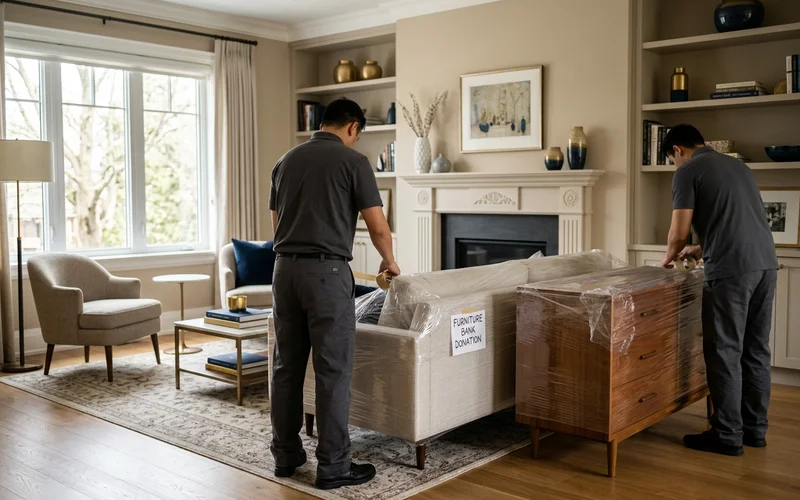
- Keep parts together. Shelves, hardware, legs and keys are bagged and taped to the piece they belong to.
- Wrap for transport. Furniture blankets protect finishes in the van.
- Match to the partner. Building materials and cabinetry go to ReStore, smaller housewares to Salvation Army or Goodwill, beds and dressers to furniture banks.
Timing Donations Within an Estate Clearing
Donations should always come after two earlier steps: family review of keepsakes and claimed items, and identification of anything worth selling at auction. Only once those are done does the remaining usable furniture go to donation partners. On a typical standard-tier estate, donation runs happen on the later days of the clearing, often several runs to different partners. On large estates and hoarding overlaps, donation runs may happen throughout the project. Each run is recorded with its date, partner and contents.
| Item | Usually best route |
|---|---|
| Solid wood dining set in good condition | Furniture bank or ReStore |
| Mid-century teak sideboard | MaxSold auction first |
| Everyday kitchenware | Salvation Army or Goodwill |
| Kitchen cabinets from a renovation | Habitat for Humanity ReStore |
| Stained upholstered sofa | Recycling or recorded disposal |
The aim is simple: the right item, to the right place, with a record.
Receipts and Records
Donation receipts are filed in the executor's documentation package, together with a summary of what went to which partner. Our guide to donation tax receipts explains how receipts are collected and why they go to your accountant.
Donating well takes a little planning. Done right, it turns a hard part of estate clearing into something families feel good about.