Older Homes, Different Logistics
Toronto's century homes in the Annex, Riverdale, Trinity-Bellwoods, Cabbagetown, Leslieville and Roncesvalles are some of the city's most loved houses. They are also some of the hardest to clear. Narrow staircases, tight landings, heritage woodwork, laneway access and low basements all change how the work is done. A full house estate clearing in a century home needs a plan built around the building.
Narrow Staircases and Tight Turns
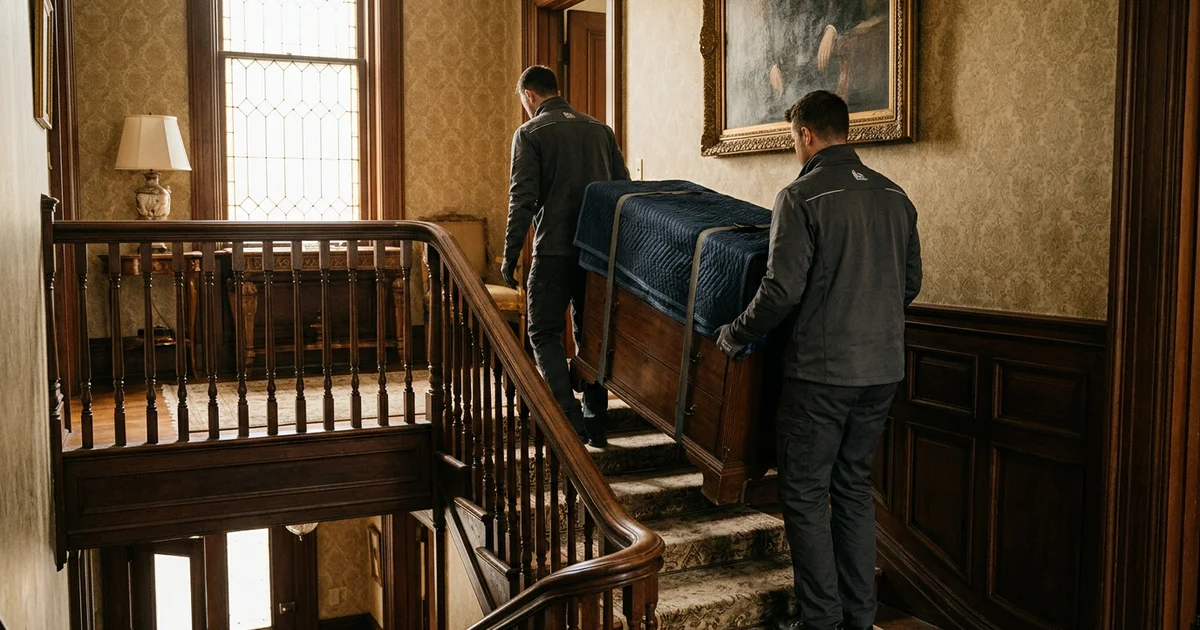
Victorian and Edwardian homes often have steep, narrow stairs with a turn at the landing. Furniture that went up decades ago, sometimes before a renovation, may not come down the same way. Our approach:
- Measure first. Stair width, landing turns and door frames are measured before lifting.
- Disassemble where possible. Bed frames, tables and wardrobes are taken apart, and hardware is bagged and labelled.
- Protect the woodwork. Banisters, newel posts, moldings and door frames are padded.
- Never force it. If a piece will not fit, we discuss options with the executor rather than damaging the house.
Our furniture removal team handles heavy antiques, pianos and fragile pieces with the same care.
Laneway Access and Street Parking
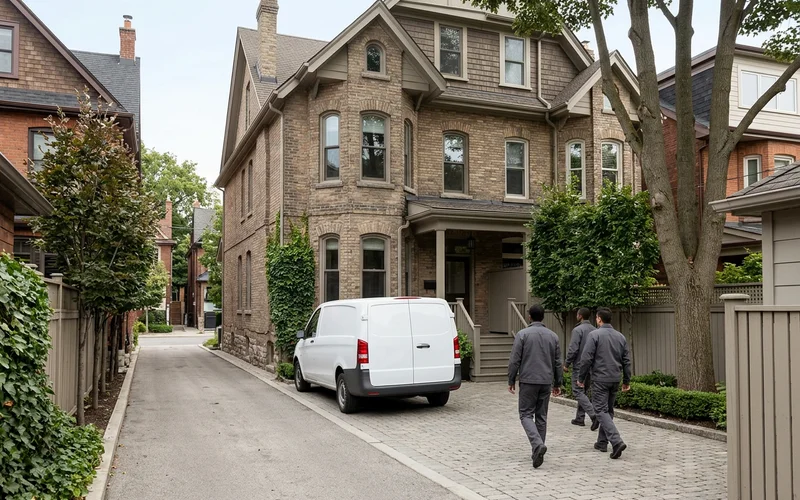
Many century homes have no driveway. Loading may happen from the street, a shared laneway or a rear garage. We plan access in advance: checking laneway width, garage clearance and whether a street parking permit is needed. Our plain white unmarked vans are parked so neighbors can still come and go.
| Access situation | How we plan for it |
|---|---|
| Street-only frontage | Parking arranged in advance, efficient loading windows |
| Shared laneway | Courtesy to neighbors, short loading stops |
| Rear garage on laneway | Garage cleared first to create a loading area |
| Semi-detached shared walls | Quiet working hours, careful carrying on shared stairs |
Basements and Crawlspaces
Century basements are often low, uneven and divided into small rooms, with crawlspaces under additions. They also tend to hold the oldest and most surprising contents: trunks, preserves, old tools, photographs and papers. We sort these spaces carefully, often passing boxes out by hand, and check every container before it is removed.

Attics and Knee-Wall Storage
Attics and the storage spaces behind knee walls on upper floors are easy to forget and often hold decades of family history. They are part of every full clear we do, right through to a broom-clean handoff.
Protecting the sale price
A century home's woodwork, floors and plaster are part of its value. Careful handling during the clearing protects what buyers will pay for.
Neighborhood Notes
Different century neighborhoods bring different challenges.
| Neighborhood | Typical homes | What we plan for |
|---|---|---|
| The Annex | Large Victorian semis and houses, often divided | Steep stairs, laneway loading, tenant areas |
| Riverdale | Victorian and Edwardian row houses | Narrow frontages, street parking |
| Trinity-Bellwoods | Narrow row houses with laneway garages | Tight stairs, laneway access |
| Cabbagetown | Heritage row houses | Delicate woodwork, limited parking |
| Rosedale and Moore Park | Large detached century homes | Multiple floors, attic and basement volume |
| Casa Loma | Grand older homes | Heavy antiques, long carrying distances |
Older Homes Hold Older Things
Century homes often hold contents as old as the house. Trunks in the attic, letters in a desk, tools in a basement workshop and china in a butler's pantry can date back generations. These are exactly the items that deserve a careful look before anything is cleared. Our crews check every container in attics and basements, set aside papers and photographs, and log anything that may have value for auction or for the family.
What It Costs
Century homes follow the same tiers as any home, with access affecting crew time: standard 2-3 bedroom homes are $4,500 to $9,000, larger homes $9,000 to $18,000, and premium estates $12,000 to $25,000. The written itemized quote within 48 hours accounts for stairs, access and parking, with no rush fees added afterward.
Century homes deserve a crew that respects the building as much as the belongings. With the right plan, even the narrowest staircase is just another part of the job.